
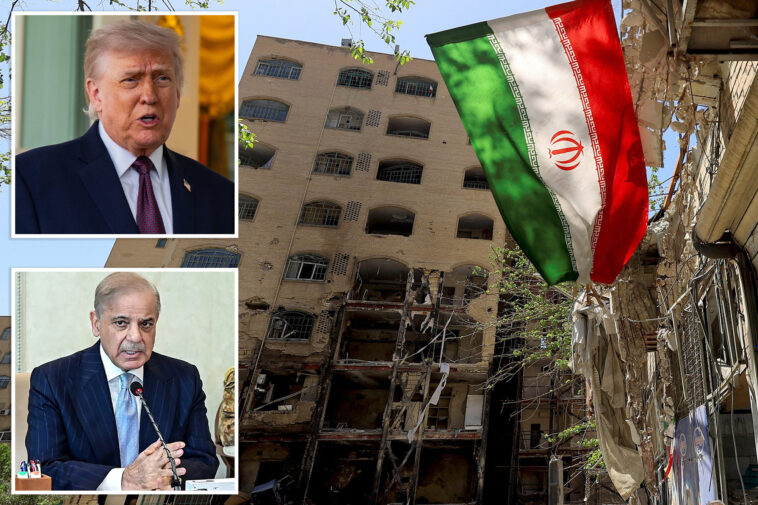
ISLAMABAD — Additional US-Iran peace talks “could be happening over next two days” in Pakistan’s capital, President Trump told The Post on Tuesday.
In an initial phone interview, Trump had claimed that discussions were “happening, but, you know, a little bit slow” before indicating that a second round of direct negotiations to end the seven-week war would likely happen somewhere in Europe.
About half an hour later, Trump called back with an update.


“You should stay there, really, because something could be happening over the next two days, and we’re more inclined to go there,” he said of Islamabad. “It’s more likely, you know why? Because the field marshal is doing a great job.”
Trump was referring to Pakistan Field Marshal Gen. Asim Munir, with whom he forged a connection last year while the country was in the throes of its own war with India, which ended after just four days thanks to a peace deal that the US helped to broker.
“He’s fantastic, and therefore it’s more likely that we go back there,” he said. “Why should we go to some country that has nothing to do with it?”
“I just think he’s a great guy. that guy. The field marshal. You know he ended the war with India, saved 30 million people,” he added.

Trump did not say who would represent the US in a potential second round of talks, but confirmed he would not take part.
The president also indicated he was not pleased with reports that the US had asked Iran to suspend its uranium enrichment program for at least two decades during this past weekend’s unsuccessful talks.

“I’ve been saying they can’t have nuclear weapons” he said, “so I don’t like the 20 years.”
Asked about proponents suggesting a moratorium may encourage Iran make an agreement, Trump answered: “I don’t want them [Iran] to feel like they have a win.”
Retired Pakistani Lt. Gen. Muhammad Saeed, involved in arranging the talks, claimed Tehran has shown “flexibility” on the explosive issue of uranium enrichment — a key sticking point that has long derailed diplomacy.
But that flexibility comes with a catch.

“Iran has to be able to take something back to its people that doesn’t look like a surrender,” said Saeed, describing the Islamic Republic’s need to frame any compromise as being made “in the golden trust of the people.”
But Mohammad Marandi, who accompanied Tehran’s delegation to the Islamabad talks, took a far more defiant tone.
“A blockade won’t change Iran’s position,” Marandi said flatly, adding that “ending enrichment will not be accepted.”