Israel’s many fractious parties are still struggling to cobble together a coalition strong enough to claim the prime minister’s office, over a week after a tumultuous election that reshuffled the deck of Israeli politics.
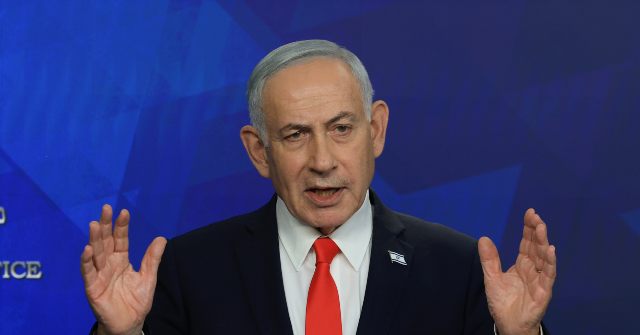
Incumbent Prime Minister Benjamin Netanyahu outperformed his polling numbers and held off a challenge from former Israel Defense Forces (IDF) chief Gadi Eisenkot, but Netanyahu and his Likud party still have not been able to secure enough votes in Knesset to form a government. No other contender has been able to get any closer than Netanyahu, despite days of frantic wheeling and dealing to put a 61-seat coalition together.
One of the biggest wild cards dealt in the election was the success of Arab parties, reversing a longstanding trend of Arab voters sitting out Israeli elections. On Wednesday, Israeli President Isaac Herzog dismissed complaints from Netanyahu and his supporters that the Arab parties “stole” the election with voting irregularities and support from foreign parties.
Israel’s Shin Bet intelligence service is still conducting its investigation into a “widespread phenomenon involving the influx of substantial funds into Israel from foreign states,” as Supreme Court Justice Noam Sohlberg put it – but Sohlberg said on Wednesday that “these are merely suspicions, and even if they are substantiated, the scope of their potential impact is limited.”
Israeli Attorney General Gali Baharav-Miara on Tuesday rejected a request from Shin Bet to interrogate lawmakers and party officials, saying there was not enough “evidence to justify such action.” The attorney general’s refusal effectively scuttled any chance for claims of election irregularities to change the outcome of the vote.
Herzog’s formal acceptance of the election as legitimate kicked off the process of making a final decision for prime minister – or accepting that the Knesset is hopelessly deadlocked and scheduling another election. If a new election is called, Netanyahu would remain in office as caretaker prime minister.
Herzog’s role in the process is to choose the candidate who gets the first crack at forming a government. If that candidate fails, others can make the attempt and, if no one can assemble a 61-seat coalition, Herzog will schedule another election for early next year.
Pole position in the coalition race will almost certainly be awarded to either Netanyahu or Eisenkot. Herzog’s choice is supposed to be guided by whichever candidate has the best chance of forming a government, rather than the party that performed best in the election. He has until November 11 to make a decision and the candidate he nominates then has 42 days to secure the parliamentary votes needed to form a government.
On Thursday morning, the coalition of Arab-majority parties known as the Joint List may have broken the deadlock by declaring its support for Eisenkot, adding a total of 19 seats to his coalition.
The Joint List said its three member parties unanimously decided to support Eisenkot “in response to the public demand to prevent Netanyahu and his government from returning to power.”
The Arab parties’ endorsement of Eisenkot was a bit tepid, as the Joint List said his block has not been eager to “confront Netanyahu’s path, as well as to fight incitement against Arab citizens and attempts to undermine the legitimacy of their political decision.”
In the end, the deep antipathy of the Arab parties toward Netanyahu after the Gaza War, and their sense that Eisenkot had a clearer path to assembling a ruling coalition, influenced the Joint List. The party said it would formally present its declaration of support for Eisenkot to Herzog on Thursday afternoon.
Netanyahu on Thursday blasted Eisenkot for relying on the Arab parties to form a government, a move that was long unthinkable for leading Israeli politicians, since those parties are largely aligned with the Palestinian cause and some are hostile to the very existence of Israel.
“President Herzog asks Abbas one question: Is Hamas a terrorist organization? Abbas’s answer: ‘You cannot put us to this test,’” Netanyahu said.
“As we said during the election campaign, Abbas recommended Eisenkot for prime minister on Thursday because he cannot form a government without the Arab parties,” Netanyahu jeered.
The incumbent prime minister was referring to Mansour Abbas, leader of the Ra’am party, which won eight seats in the October 2026 election. Abbas was one of the party leaders who met with Herzog on Thursday to offer recommendations for the next prime minister.
During the meeting, Herzog asked Abbas if he was willing to condemn Hamas – perpetrators of the savage October 7, 2023 atrocities against Israeli civilians that launched the Gaza War – as a terrorist organization. As Netanyahu said, Abbas refused to do so.
“Leave me this space to be a bridge. To also influence the other side. We are a bridge. Don’t turn us into supporters of terrorism and traitors,” Abbas told Herzog.
Abbas said that his party has renounced political violence and fully supports President Donald Trump’s peace plan for Gaza – including disarmament for Hamas and other extremist groups – and that should be good enough. He also hinted that confronting Hamas might get him killed.
“Leave me a space to protect myself and my family as well,” he asked Herzog.
In his first televised appearance since the election on Wednesday, Netanyahu warned Israelis against accepting a government “dependent on extremist Islam and these Islamist parties, which deny the very existence of a Jewish state.”
“They seek to erase the Jewish identity of the State of Israel. They say this openly. They seek to prevent us from having the ability to defend ourselves against our enemies,” he said.
“Not only will such a government not fight our enemies, it will simply dismantle us from within. This is existential,” he warned.
Netanyahu’s ability to campaign on the October 7 attack is also hindered by accusations that his government did not do enough to prevent the massacre. The families of some October 7 victims on Thursday asked Herzog to confront Likud over the intelligence failures before the attack, its refusal to investigate thoroughly afterward, and allegations of Qatari financial influence over the Netanyahu administration.
Netanyahu’s hopes of staying in office took another blow on Thursday when the ultra-Orthodox United Torah Judaism party (UTJ) declined to endorse him, or any other candidate. UTJ holds seven seats in the Knesset, so its departure from the Netanyahu coalition is a major headache for the incumbent.
UTJ is disappointed with Netanyahu for not passing legislation to keep ultra-Orthodox Jews out of military service while they are studying at seminaries. There is no issue UTJ professes to care about more, and since neither leading candidate appears satisfactory, the party decided to stay out of the coalition battle.
As of Thursday, the scorecard shows Eisenkot with 67 votes, including the Arab parties – enough to form a government, if his supporters stick with him. Netanyahu’s Likud party was the biggest winner in the October election, taking 53 seats, but Netanyahu is having trouble coming up with the additional votes he needs to form a government.
One reason to think Herzog may yet choose Netanyahu is that Eisenkot’s support from the Arab parties is very soft. Joint List party chair Yousef Jabareen told Herzog on Thursday that his coalition was grudgingly prepared to support an Eisenkot government “from the outside.”
“We are not choosing between good and better, but between what we see as bad and even worse,” he said.
Jabareen also said it would not support any Israeli military action, which could make Herzog reluctant to give the green light to a government that would collapse as soon as Hamas, Palestinian Islamic Jihad, or Iran’s terrorist proxy Hezbollah in Lebanon attacks Israel again. Knowing that such an attack would instantly create a paralyzing crisis for Israel’s government could make it all the more likely.