
See more of our coverage in your search results.

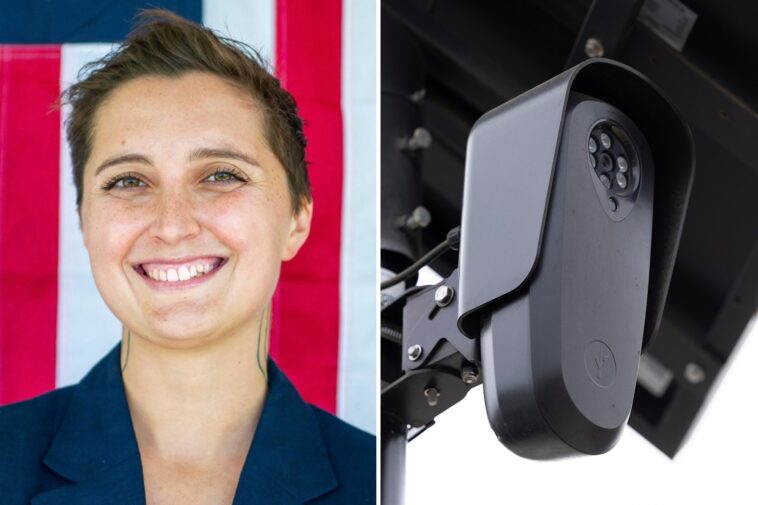
A Long Island pol is demanding her tony town rip up its contract with Flock Safety over privacy concerns and the tens of thousands of taxpayer dollars spent on fixing its vandalized surveillance cameras.
Southold Democratic Councilwoman Alexa Suess says she wants to shred the wealthy North Fork town’s $37,000 deal over concerns about the controversial surveillance company’s murky data-sharing policies, issues regarding privacy and stopping potential misuse, and the public funds blown repairing and replacing cameras that vigilante vandals repeatedly destroy.
“[Flock Safety’s] a data aggregation platform that’s marketed as a law-enforcement tool,” Suess said during last week’s town-board meeting.

“This technology does provide quite a few benefits, but I don’t think the benefits outweigh the costs — I really do believe we should reconsider our relationship with Flock or at least commit to not renewing our contract,” she said.
Flock Safety’s controversial cameras scan and store information on every car that drives past, including license plates and distinct features such has dents and bumper stickers.
That data is then searchable to cops around the country — who currently do not need a warrant to access it — and is able to be used to help track and reconstruct a vehicle’s movements.
In Southold, the tech has drawn more backlash from fed-up residents than almost anywhere else on Long Island, culminating in a [ast summer full of anti-Flock vandalism in the town, costing taxpayers tens of thousands in extra costs, Suess said, though she didn’t provide an exact dollar amount.
“This data can [help] determine where you work, live, worship, if you go to a doctors office, what support groups you might be attending, what your interests are, what your political or ideological affiliations are,” she said Flock Safety reps recently conceded to Suffolk law makers.
In June, Long Island cops ran more than 3,000 warrantless searches through the Flock Safety database for everything from simple traffic violations to alleged terrorism, The Post previously reported.

Suess also voiced concerns regarding what The Post’s reporting revealed about cops being able to pull outside police department’s data without them even knowing, and the company’s own pledge not to sell customer data being removed from the its new terms of service for next year.
The councilwoman declared the removed pledge alone should be enough to call the deal quits, since there is no state or local law that stops Flock Safety from selling residents’ movements to insurers and AI firms for training.
But even if Southold tears up its contract with Flock Safety and removes the three cameras it owns — “Big Brother’s” eyes would still be on local roads, as the Suffolk Sheriff’s Department operates almost 10 cameras in the town itself since doubling the number of Flock cams in the county from last year.
Suffolk already has hundreds of Flock Safety cameras blanketing local roads and highways through separate deals with towns, villages and even private residential communities — with most of the entities directly sharing their data with police through Flock’s sprawling and connected network.
But if the town keeps the deal in place, it risks losing federal funds along with the county, under a proposed law from US Rep. Thomas Massie, a Kentucky Republican. The proposal would strip federal funding from any local governments or police departments that contract with Flock to deploy the security cameras.
Flock Safety reps have previously remained adamant that the company does not sell any data. They did not respond to The Post’s request for comment on whether they plan to do so in the future.