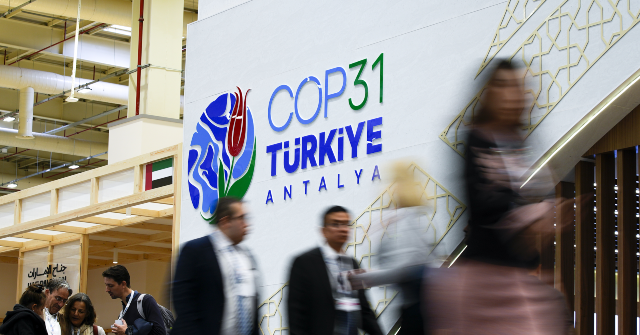
The United Nations COP31 climate conference began in Antalya, Turkey, on Monday, and is scheduled to run through November 20.
In an unusual twist, Turkey currently holds the rotating precedency of the Conference of the Parties (COP), the decision-making body of the U.N. Framework Convention on Climate Change, and the body from which the COP climate conferences derive their name — but Australia is effectively running the conference while Turkey handles hosting duties.
The co-hosting compromise arrangement, the first of its kind for COP summits, was reached in November 2025 after both countries insisted on hosting the event, and neither was willing to back down. The ultimate agreement came as something of a disappointment to Pacific Island nations, which felt they deserved to take center stage in an event hosted by Australia.
“It is very important that the Pacific is completely involved in pre-COP events as we are the ones that are affected by climate change the most and we give out zero emissions,” Papua New Guinea Foreign Minister Justin Tkatchenko said glumly when the Turkey-Australia co-hosting deal was struck last year.
Australia seems to have most of the administrative responsibilities for the COP31 summit and throughout the coming year, so it was unclear exactly what Turkey got out of the compromise — other than the financial rewards of selling accommodations to the thousands of global bureaucrats and representatives from third-party organizations who attend climate-change events.
Total attendance for the meetings in Antalya will be almost 100,000 people, including 102 leaders from 95 countries and seven international organizations, according to the Turkish Environment, Urbanization, and Climate Change Ministry.
Turkish Environment Minister Murat Kurum said that Turkey envisions COP31 as a meeting about “implementation” because it is “high time to transition from words and promises to real actions.”
This is almost word-for-word identical to the mission statement of last year’s COP30 conference in Belem, Brazil, whose presidency said it would be the “implementation COP.” COP29, which was held in Baku, Azerbaijan, said its central theme was “implementation and closing the action gap.”
One aspect of the push for “implementation” is that other members of the COP want to dilute the influence of energy-producing nations, which have been able to use their positions to thwart the most draconian anti-fossil-fuel measures advanced at climate summits. Some of the climate faithful grumbled that splitting leadership powers between Turkey and Australia was likely to prevent anything meaningful from being accomplished at COP31, pushing difficult decisions and big-ticket agenda items back to next year.
Turkey wants other members to embrace its “35 by 35” plan, which looks to raise the share of global clean energy demand to 35 percent by 2035. It currently stands at around 20 percent at the dawn of the AI era, and data centers are expected to have huge energy demands in the coming years.
“By electrifying daily life, from transport to buildings and industry, we can protect families and businesses from volatile energy markets. This 35 per cent by 2035 target will be one of the defining priorities of our COP31 presidency,” Kurum said in September.
Critics of Turkey’s “electrification” agenda worry that putting so much pressure on electric grids will prompt many countries to build more “dirty” power plants, using power sources like coal and gas. The nightmare for many climate activists is a future full of electric vehicles (EVs) charging from a grid powered by coal-fired plants. COP31 co-host Australia is likewise under fire from activists for approving coal and gas power plants to meet its rising electricity needs.
The National foresaw “political turbulence” at COP31 and in the year to come because climate shifts are increasing the demand for energy — “more heating needed during longer and colder winters,” for example — on top of surging energy demand from data centers.
“The current crises weaken our ability to tackle climate change. They cost money, they distract us, and they undermine international co-operation. With sky-high prices for diesel and liquefied natural gas, it is not surprising incumbent politicians prioritise sniffing out new supplies of hydrocarbons over conserving nature,” the article lamented.
Another problem is that left-wing politicians have made it very difficult to get permits and other paperwork for large projects across the Western world, a tactic that helped to strangle coal and gas plant construction — but is also thwarting efforts to build vast solar and wind farms to replace them.
The National suggested that clearing up the paperwork logjam, perhaps with special dispensations given only to climate-approved clean energy projects, should be on the agenda at COP31 — and perhaps environmentalists will need to abandon their decades-long antipathy toward nuclear power.
“While multiple converging crises can sometimes seem overwhelming, unchecked climate change will make them all worse. Sensible but bold moves on nuclear, renewables, electric vehicles, and other low-carbon sources boost energy security and affordability. That should be good domestic politics in any country,” the article concluded.