
See more of our coverage in your search results.

A new bill could pave the way for prediction markets like Kalshi and Polymarket to operate in New York state to end their legal battle with Empire regulators — but the state government would have to get a cut of their fees.
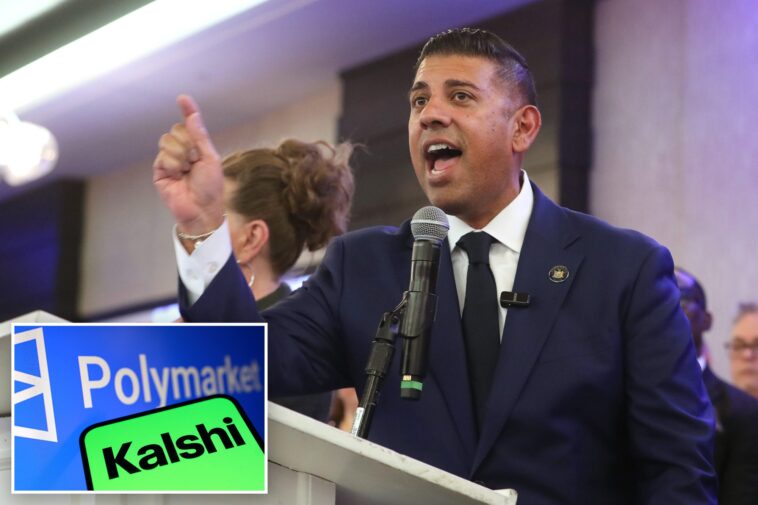
Sen. Jeremy Cooney introduced legislation that would place the services under the authority of state gambling regulators and would implement a 10% tax on what they charge.
The services let users enter into a contract over real-life events, including sports, current events or politics, to potentially collect a payout based on their wager. The state has argued that it constitutes a bet.
Cooney’s bill would direct revenue from the state surcharges to fund childcare subsidies, a hot topic on deck for Albany next year as Gov. Kathy Hochul weighs new taxes to support the billions of dollars in new spending she began pumping toward Mayor Zohran Mamdani’s childcare promises this year.

“I’m placing a bet on the future of UPK in New York. We are the financial center of the world, and our state must lead when it comes to ensuring prediction markets reinvest in our communities and meet our high consumer protection standards,” Cooney wrote in a statement acknowledging the new fund the childcare bill would create.
“The Futures Fund for Early Education would take revenue generated by these popular financial exchanges and dedicate it directly to UPK in every community in New York. When we invest in our youngest New Yorkers, we are investing in our state’s future,” he added.
The bill would also specify that elected officials and some government employees would be legally barred from the platforms.
Kalshi faces possible closure in New York after Attorney General Letitia James sued on the grounds similar markets were illegal gambling operations.

The lawsuit, which resembles a similar action James’ office is taking against Polymarket, was returned to state courts after a federal judge decided not to consider its case last week, in a blow to the company.
Insiders speculate that the prediction markets have an uphill battle to stay alive in the courts.
While it’s unclear how much backing Cooney’s bill has, it could send a signal that the prediction markets are willing to make an unpleasant deal with New York lawmakers and policymakers in order to keep their access to New York’s user base rather than be booted entirely.
The firms have been on a charitable giving blitz in New York in recent months, pumping money into education and housing initiatives.