
A federal judge on Friday again blocked the U.S. Postal Service from requiring states to follow new mail-ballot procedures developed under President Donald Trump’s executive order.
U.S. District Judge Indira Talwani, who was appointed in 2014 by President Barack Obama, issued a preliminary injunction preventing the Postal Service from imposing the requirements ahead of the November midterms. The ruling replaces a temporary block Talwani imposed after Democratic-led states renewed their legal challenge.
States may voluntarily use the Postal Service’s new system, but none have announced plans to do so, the Associated Press reported.
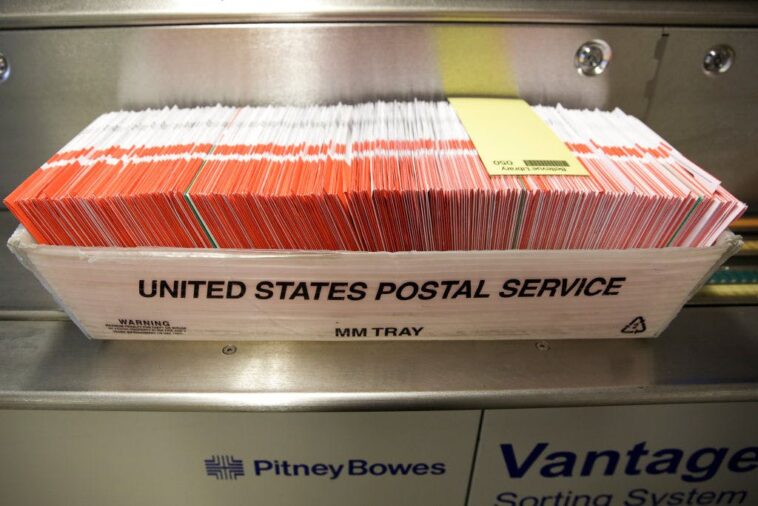
Under the rule, state election officials would have to submit voters’ names, addresses, and unique ballot-envelope barcodes through a federal portal before turning outbound ballots over to the Postal Service. The Postal Service could reject mailings that did not comply and return them to election officials.
Talwani said the timing would make compliance difficult as states begin distributing ballots. North Carolina mailed its first ballots Friday. Other states are expected to soon follow.
Talwani wrote that states are “unable to pivot this late in the election cycle, nearly guaranteeing significant disenfranchisement for eligible voters.”
The case reached the Supreme Court last month. On August 24, the justices paused an earlier injunction issued by Talwani, as The Daily Wire previously reported, finding that the states had sued before showing that Trump’s executive order would actually harm them. The justices made clear that they had not ruled on whether the administration’s actions were legal.
Following that ruling, Talwani lifted her remaining injunction, temporarily clearing the way for the Postal Service to proceed. By then, the Postal Service had issued its final rule. That allowed the states to challenge the rule itself.
The states then sued over the final rule, and Talwani blocked it Friday.
The Trump administration asked the Supreme Court on Thursday to lift Talwani’s temporary block. Justice Ketanji Brown Jackson gave the states challenging the rule until 10 a.m. Tuesday to respond. Talwani replaced the temporary order with a preliminary injunction Friday, and the parties notified the Supreme Court of the new ruling. The justices have not indicated when they will act.