
Op-Ed
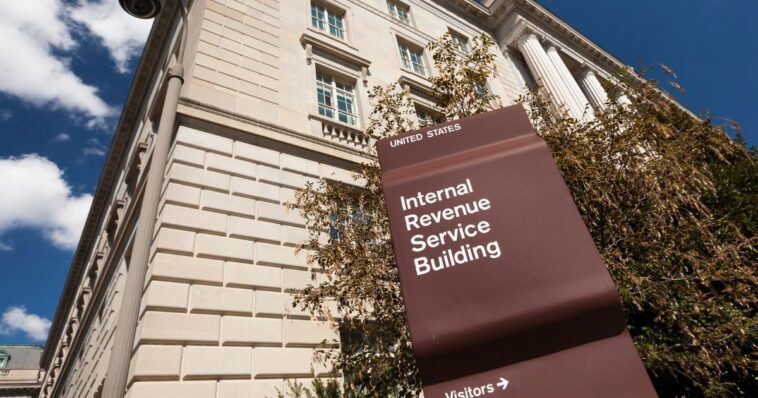
The Internal Revenue Service building in Washington, D.C. (Pgiam / Getty Images)

By Greg Bresiger September 12, 2026 at 2:06pm
Taxes, a recent report confirmed, have become the biggest bill for the average American. They cost more than housing, food, and other necessities.
Yet this has been apparent for decades, affecting the lifestyles of millions of Americans, as well as millions of others living in other advanced welfare state societies.
In the 1940s and 1950s, progressive tax rates in the United States could reach 91 percent. Highly successful people stopped working once they reached the 91 percent rate in a tax year.
No matter how much you love your work, does it make sense to keep working if you are only allowed to keep nine cents out of a dollar? For many hardworking people, the answer was no.
So comedian Jack Benny got a lower rate by incorporating. By claiming all his income was corporate, and after waging a battle in tax court over years, Benny achieved a lower rate in a famous 1955 court decision.
But relief was coming for the rest of us.
In the early 1960s, President John Kennedy initially believed that cutting taxes was unjust and favored the rich. But Kennedy, a Democrat, found the nation in a recession.
After researching taxes, Kennedy changed. In the last months of his life, President Kennedy realized high taxes hurt the economy. Hence, they hurt everyone.
In a famous address in New York, a few months before his death, Kennedy called for a tax cut because it would be best for everyone.
He said, “A rising tide lifts all boats.”
A strong economy followed the cuts until the Vietnam War short-circuited the growth later that decade. To pay for the huge war and welfare spending of the 1960s and 1970s — not only did the Vietnam War go longer and end up more expensive than anticipated, but the startup costs for Medicare were much higher than quoted — tax rates rose again in the 1970s.
President Ronald Reagan, in pushing for his tax cuts in the 1980s, cited Kennedy. Those arguments angered class warfare critics.
They insisted low taxes were a strategy of helping the rich at the expense of the rest of us. But while it may make some people feel good knowing that rich people pay through the nose, the majority of Americans still paid higher taxes in the 1970s, directly and indirectly, owing to inflation, which is the ultimate tax.
Excessive government spending and regulation, which inevitably leads to more taxation under all governments, has been going on for a long time in almost every democracy.
In “the hungry 40s,” a period of the 19th century in early Victorian Britain when the nation was going through a depression, average people paid a high percentage of their income for food.
Their daily bread was taxed through the Corn Laws — a series of rules on how taxes applied to imported grains. Eventually in 1846, the tax was ended through the actions of the prime minister, Sir Robert Peel — who broke with his Tory Party and was driven out of it by a young Benjamin Disraeli — and the pressure he felt from a group of radical MPs, the Manchester School.
Cutting a vital tax was one factor in leading Britain out of depression.
Peel, a “liberal conservative,” was the teacher of an up-and-coming Conservative who later became a classical liberal, William Gladstone.
Gladstone became one of Britain’s most successful Chancellors of the Exchequer. He was famous for lean budgets and several times tried to abolish the income tax — a good way of increasing buying power in any age. Peel believed that the way out of a depression was to keep costs for the average person as low as possible, and taxes were a big cost. This was an interesting, timeless observation in modern welfare-and-warfare states, especially those in the middle of or just out of a war.
At the end of World War I, with the United States in the midst of a depression, many well-heeled taxpayers wouldn’t invest in stocks because tax rates were high. They started putting their money in tax shelters and not stocks, looking to escape excessive rates of taxation.
The Treasury secretaries of both the outgoing Wilson administration and incoming Harding administration complained that high taxes were wrecking the economy — that it was starved for capital because the rich preferred to keep their money in tax shelters.
Treasury Secretary Andrew Mellon, in his brilliant, little-known book “Taxation,” called for lower taxation and reduced spending as strategies to persuade the rich to stop locking up their money in municipal bonds or worse.
Indeed, excessive taxes have driven many successful people into becoming tax exiles. But not all.
James Herriot, the wonderful British author of the “All Creatures Great and Small” books, never got rich from his bestselling books and popular television shows. Herriot, unlike some other British high earners, would not leave his beloved home. He paid an 83 percent tax rate.
When interviewed by journalist Ray Bennett, Herriot, at age 62, was still a full-time working veterinarian, although he was advised to become a tax exile.
“There’s not many of me left in this country,” he said. “Most bestselling authors are away in Ireland, where they pay no tax at all; in Jersey, where they pay 10%; or on the Isle of Man, where it’s much the same. But I stay here and pay my 83%. I like it here.”
There were more episodes of this “we must seek shelter for our wealth or we’ll lose it” philosophy in the 1960s and 1970s.
As a young reporter working for Financial Planning Magazine, I got a taste of this. I remember financial professionals trying to sell well-heeled investors all manner of seemingly bad investments, often in the form of limited partnerships. They were everything from low-income housing to Broadway shows — of the latter, a show business expert once told me that putting money in the Great White Way was “a great way to lose money” since a supermajority of shows ran in the red.
But they had something going for them no matter how egregious their losses — they were great tax write-offs.
Taxes, despite several so-called “low tax” administrations, remain a problem. Indeed, Americans now pay more in taxes than they spend on many basic necessities, and the growing tax burden shows how the government has become “so big and bloated,” writes economist Stephen Moore.
He cited a chart from the Committee to Unleash Prosperity estimating Americans paid about $8.19 trillion in taxes in 2025, compared with roughly $7.39 trillion spent on food, clothing, and housing combined.
“Government has become so big and bloated that taxes cost more than life’s basic necessities. Americans pay more in taxes than they spend on food, clothing and shelter combined,” Moore adds.
He says Americans should be “outraged,” but maybe they’re not. Many vote for incumbents.
And few can pull a Jack Benny.
The views expressed in this opinion article are those of their author and are not necessarily either shared or endorsed by the owners of this website. If you are interested in contributing an Op-Ed to The Western Journal, you can learn about our submission guidelines and process here.
Advertise with The Western Journal and reach millions of highly engaged readers, while supporting our work. Advertise Today.
Gregory Bresiger, a former business reporter for the New York Post Sunday Business section, is the author of the book “The Frugal Libertarian: Building Wealth in an Overspending World.”