
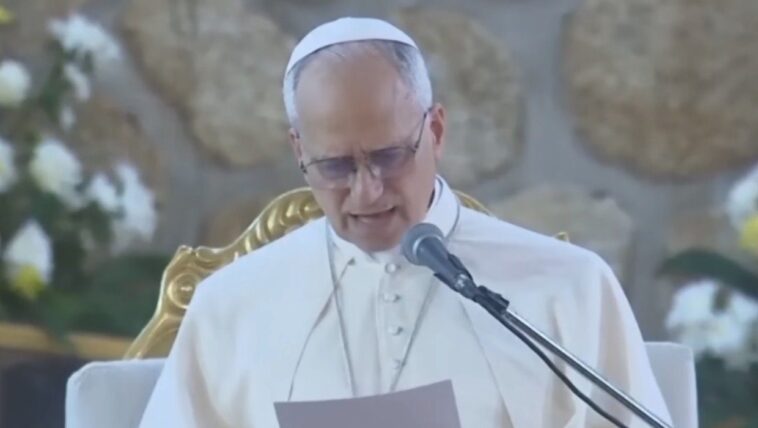
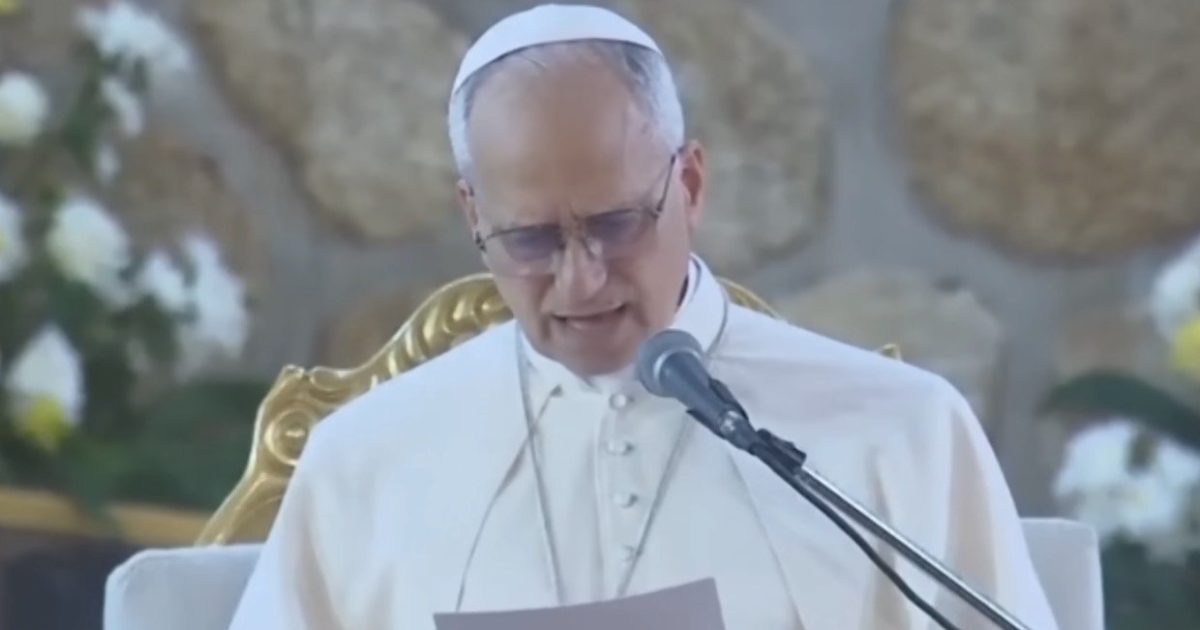
In a sweeping address, Pope Leo XIV has issued a stark warning about artificial intelligence, cautioning that the technology risks eroding human dignity, accelerating global conflict, and placing life-and-death decisions in the hands of unaccountable systems.
The warning came in his first major encyclical, Magnifica Humanitas (“Magnificent Humanity”), a wide-ranging document that places AI at the center of a broader moral and civilizational crisis.
At more than 40,000 words, the document represents one of the most comprehensive statements yet from the Catholic Church on the role of technology in modern life. It also signals a growing concern that rapid innovation is outpacing ethical reflection.
The Pope’s central argument is this: technology, he insists, must remain subordinate to the human person—not the other way around.
“Technology is never neutral,” Leo wrote, emphasizing that it reflects the values of those who design and deploy it. That insight forms the foundation of the document’s broader critique.
While acknowledging the benefits of technological progress, the pontiff warned that AI is increasingly being shaped by forces disconnected from moral accountability. Chief among these are large corporations and geopolitical actors.
The encyclical highlights what Leo calls a dangerous shift. Power, he argues, is moving away from democratic institutions and into the hands of “major economic and technological actors.”
The statement appears to be is a direct challenge to Silicon Valley and the global tech elite. Companies developing advanced AI systems now wield unprecedented influence over information, warfare, and economic systems.
The Pope’s concerns are especially sharp when it comes to military applications. He warned that AI is contributing to what he described as the “normalization of war.”
In modern conflicts, algorithms increasingly play a role in targeting decisions. That reality, Leo argued, raises profound ethical questions.
“It is not permissible to entrust lethal or otherwise irreversible decisions to artificial systems,” he wrote. The line reflects a clear red line for the Church.
The encyclical also warns of a broader cultural shift. War, Leo suggests, is no longer just fought on battlefields—it is shaped by narratives, media, and technology.
He described a “troubling revival of war as an instrument of international politics.”
This revival, he argues, is fueled by a combination of geopolitical competition and technological acceleration. AI, in particular, amplifies these dynamics.
The document calls for strict global regulation of AI in warfare. Leo urged the creation of international agreements to prevent an arms race driven by autonomous systems.
“To disarm does not mean rejecting technology, but preventing it from dominating humanity,” he wrote. The message reflects a cautious but not anti-technology stance.
Beyond war, the Pope also addressed the economic implications of AI. He warned that unchecked automation could lead to widespread job displacement.
A recent study cited in the broader debate suggests that nearly 12 percent of jobs could be affected by AI. For the Church, this is not just an economic issue, but a moral one.
“The pursuit of greater profits cannot justify choices that systematically sacrifice jobs,” Leo wrote. He emphasized that the economy must serve the human person.
The encyclical ties these concerns to the Church’s long tradition of social teaching. Leo explicitly references Rerum Novarum, which addressed the upheavals of the industrial revolution.
Just as earlier generations faced the moral challenges of industrialization, today’s society must confront the consequences of digital transformation. The parallels are clear.
Leo also warned of new forms of exploitation. He pointed to the often invisible labor behind AI systems, including data labeling and resource extraction.
These workers, he suggested, are part of a modern “digital underclass.” Their contributions are essential, yet often undervalued.
The Pope also raised concerns about truth itself. AI-driven disinformation, he argued, is undermining democratic life.
“Indifference to the truth leads… to a descent into totalitarianism,” he wrote. The warning echoes broader concerns about information control in the digital age.
Young people are particularly vulnerable. Leo warned that excessive reliance on technology can erode critical thinking and deepen social isolation.
He called for educational reforms that emphasize reflection, discipline, and moral formation. Technology, he argued, should not replace human judgment.
The encyclical also addresses deeper philosophical questions. Leo draws a sharp distinction between human beings and machines.
“So-called artificial intelligences do not undergo experiences… do not know from within what love, work, friendship or responsibility mean,” he wrote. The point underscores the Church’s defense of human uniqueness.
He also warned against transhumanist ideologies. These movements, which seek to transcend human limitations through technology, risk undermining the very concept of human dignity.
“If the human being is treated as something to be surpassed, it becomes easier to accept that some lives are less worthy,” Leo cautioned. The implications, he suggests, are profound.
At the same time, the Pope did not reject technological progress outright. Instead, he called for a balanced approach grounded in ethics and responsibility.
This perspective has found some support within the tech industry itself. AI researcher Christopher Olah acknowledged that current incentives do not always align with ethical outcomes.
Regulation, Olah said, may be necessary to ensure that AI serves humanity. The Vatican has been engaged in dialogue with tech leaders for years.
Still, tensions remain. The Pope’s critique contrasts sharply with voices in the tech world calling for greater militarization and rapid development.
The encyclical also comes amid broader geopolitical tensions. Leo has criticized ongoing conflicts and warned against the expansion of military-industrial systems.
His message is ultimately one of caution. In an age of rapid change, he argues, humanity must not lose sight of its moral foundations.
For readers concerned about the direction of modern society, the encyclical offers a clear challenge. Progress, it suggests, must be measured not only by innovation, but by its impact on the human soul.
As the debate over AI continues to unfold, the Vatican’s intervention ensures that the conversation will not be purely technological. It will also be deeply moral—and increasingly urgent.
Ad block users: Some site features may not work correctly while an ad blocker is enabled, because they break scripts and content this website depends on. If you can’t see comments below, for example, please disable your ad blocker.