See more of our coverage in your search results.

Hermosa Beach, once a gritty West Coast hardcore punk mecca, is celebrating a very different distinction these days — a dramatic reduction in street homelessness that puts the affluent beach town among a small group of California success stories.
The South Bay city announced it has achieved Functional Zero Street Homelessness after two years of outreach and housing efforts, becoming the second city in the region to reach the milestone.

The achievement doesn’t mean the streets are completely free of homeless people. Hermosa Beach still has 11 active street cases, but its latest numbers show more people getting into housing than falling into homelessness.
Between March and August 2026, the city recorded 11 exits into interim or permanent housing and eight new cases of homelessness.
The median time people spend living on the streets has dropped to 49 days, down from 189 days during the six-month period ending June 2025, according to the South Bay Cities Council of Governments.

Of 26 confirmed exits from street homelessness between January 2025 and September 2026, 10 people moved into permanent housing, seven reunited with family and nine entered interim shelters, shared housing or specialized care facilities.
Seventy-three percent of those helped exited street homelessness within 90 days, while half did so within their first 30 days of contact with outreach workers.
Under the Functional Zero standard developed by the South Bay Cities Council of Governments, a city must move more people into interim or permanent housing than become homeless locally over a six-month period. It must also maintain a median street duration of less than 90 days.

Senior Management Analyst Sara Russo led much of Hermosa Beach’s two-year push, working with city staff, the regional council and HERO Community Services to connect homeless residents with housing and other assistance.
The effort includes helping people obtain identification needed for housing and employment, access eligible benefits and reconnect with family.
“Not everyone accepts help right away, but we keep showing up and connecting people with the resources they need,” Russo said.


The city has also partnered with Redondo Beach on Homeless Court since 2022, helping eligible individuals resolve certain legal matters through judge-mandated services that can lead to housing. In March 2025, the City Council adopted an ordinance prohibiting camping in all public areas.
Hermosa Beach is the first of three cities that joined the regional Functional Zero program in 2024 to reach the benchmark. The council will recognize the achievement at a Nov. 19 celebration.
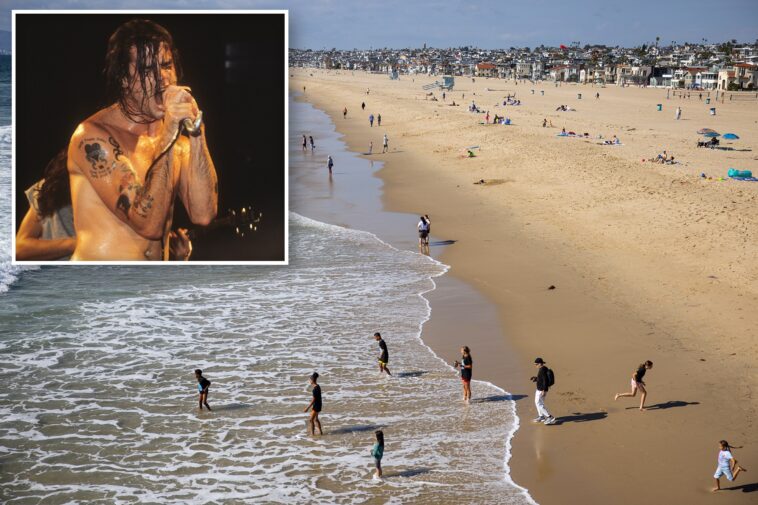
The city’s latest distinction is a far cry from its former reputation as a hardcore punk rock capital.

During the late 1970s and 1980s, Hermosa Beach became a major center of West Coast punk, with Black Flag founder Greg Ginn establishing rehearsal space and SST Records in an old Baptist church on Manhattan Avenue.
The surrounding South Bay scene produced or launched influential acts including the Circle Jerks, Descendents, Redd Kross, Minutemen and, later, Pennywise.
Today’s Hermosa Beach is a considerably wealthier and more polished coastal enclave, but it hasn’t forgotten its rebellious past.
A dedicated punk rock mural, exhibits at the Hermosa Beach Museum and local music events keep that history alive.