
© MalikNalik / Shutterstock
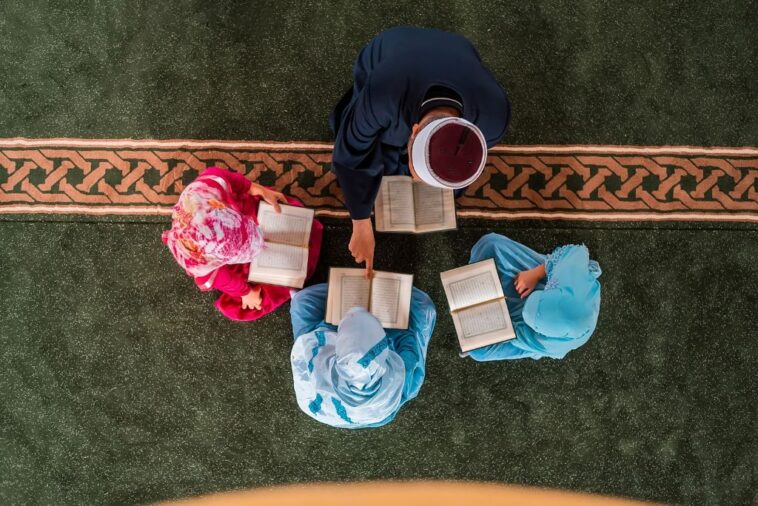
A ruling by the High Court of Justice of the Balearic Islands (TSJB) has set off alarm bells among Spaniards by forcing the introduction of Islamic religion classes in public and state-subsidised private schools in Palma and Inca, including schools with a Catholic ethos.
🚨 ÚLTIMA HORA: Cinco familias musulmanas logran imponer clases de islam en colegios de Mallorca, incluso en un centro católico.
La Justicia balear ha ordenado a varios colegios de Mallorca —incluido uno católico— ofrecer religión islámica a petición de cinco familias magrebíes,… pic.twitter.com/gamCZBdJzV
— Isaac (@isaacrrr7) November 28, 2025
This judgment, issued in November 2025, partially upholds the appeal filed by five Maghrebi Muslim families who denounced the “administrative silence” of the Regional Ministry of Education, invoking Article 27.3 of the Spanish Constitution, which protects parents’ right to ensure their children receive religious education in accordance with their own convictions.
🇪🇸 | En algunos colegios públicos españoles ya se imparte el Islam en su totalidad como religión.
Resulta curioso que mientras el progresismo español lucha para que el Catolicismo se deje de impartir en los colegios públicos españoles, ahora guarde silencio cuando en algunos… pic.twitter.com/yndr6z1DTz
— ʜᴇʀQʟᴇs (@herqles_es) January 21, 2024
The case affects schools such as CEIP Levante, La Salle, San Vicente de Paúl and Santo Tomás de Aquino in Inca, and Colegio Pintor Joan Miró in Palma, and does not assess compatibility with the Christian educational project of these institutions, prioritising individual demands over teaching autonomy.
The lawsuit was filed in July 2024, when the mothers demanded that their children be enrolled in Islamic religion classes for the 2024-2025 academic year.
The regional administration, led by Minister Antoni Vera, ignored the requests for months, despite a 2019 agreement with the Islamic Commission of Spain —expired in 2023 but informally extended— that obliges public schools to offer the subject whenever there is a minimum demand.
En Baleares se prohíbe estudiar en español, pero se empieza a enseñar árabe y quitar el jamón en colegios.
❌ Basta de imposición multicultural.
✅ En VOX defendemos nuestra lengua, nuestras tradiciones y nuestra seguridad.
España, con orden, ley y respeto.@ManuelaSesIlles pic.twitter.com/WRCgrKW1PR
— VOX Baleares (@voxbaleares) September 6, 2025
The TSJB, in a final decision with no possibility of appeal, criticised the lack of information provided to the families and ordered the deployment of “the necessary activity” to teach Islam in schools close to their homes, extending the mandate to the entire island, including Palma, where no school had offered it until now.
During the previous academic year, only nine schools in Mallorca —all in the Part Forana area— had five teachers for 727 pupils, funded by the Balearic Government.
From a conservative perspective, this imposition represents an assault on freedom of education, enshrined in Article 27 of the Spanish Constitution, and another step in the erosion of Spain’s Catholic identity.
The Catholic Schools association has categorically rejected the ruling, arguing that it forces confessional schools to dilute their own ethos, freely accepted by parents upon enrolment.
The secretary of the Balearic Islamic Community, J. Nur Bió, defends the measure as “mandatory by law” in light of growing demand —more than 100 applications in 15 schools the previous year— while ignoring the cultural cost: Spain, with 2.4 million Muslims according to the Andalusí Observatory, is seeing uncontrolled immigration impose changes that dilute its Christian roots.
In Andalusia, nearly 200 schools teach Islam to 23,000 pupils with 23 teachers —the highest coverage in the country— yet it generates friction due to the strain on resources and the perception of publicly funded indoctrination.
Catalonia, with 90,000 Muslim pupils —double that of Andalusia— launched a pilot scheme in 2020 in Barcelona, Baix Llobregat, Girona and Tarragona, but faces criticism for prioritising Catalan in teaching and excluding teachers whose qualifications have not been recognised.
Murcia and La Rioja, with 18,500 and 4,000 pupils respectively, obstruct implementation citing “lack of demand” or fragmentation, according to the Islamic Commission; from a conservative viewpoint, this is legitimate resistance to Islamisation.
In Navarre, Galicia, Asturias and Cantabria, the subject is conspicuously absent, despite Law 26/1992 on Cooperation Agreements with the Islamic Commission, which places Islam on an equal footing with Catholicism in terms of compulsory provision.
Están convirtiendo los colegios catalanes en un laboratorio de sustitución cultural:
➡️Clases de árabe y cultura marroquí
➡️Tiempo y espacios reservados en horas lectivas para rezar
➡️Menús HalalQuieren borrar nuestra forma de vida e imponernos la islámica.
NO LO PERMITIREMOS pic.twitter.com/OvJ8aKfIPb
— Ignacio Garriga (@Igarrigavaz) February 15, 2025
We previously reported on this at Gateway Hispanic in an analysis of Islamic fundamentalism in Spain that warned of the advance in public education as a tool of cultural influence.
This Balearic ruling, in a context of massive arrivals of Maghrebi immigrants —3,272 irregular migrants in the Balearic Islands up to September 2025, a 300 % increase over 2024— demonstrates how lax policies under Pedro Sánchez’s government are turning schools into ideological battlegrounds.
Vox denounces that while values contrary to gender equality or secularism are taught, priests such as Custodio Magister are prosecuted for criticising Islamism.
🇪🇸🇲🇦 | El PP y Coalición Canaria rechazan la iniciativa de VOX para acabar con las clases de islam en los colegios de las islas:
Se pliegan así al Programa de Enseñanza de Lengua Árabe y Cultura Marroquí (PLACM) en España, sistema que financie e impone Marruecos. pic.twitter.com/DGcztMozCm
— ʜᴇʀQʟᴇs (@herqles_es) September 12, 2025
Reform is urgently needed to prioritise cultural sustainability: limit confessional offerings in schools with their own ethos, demand reciprocal integration and defend the Christian welfare state from external pressures.
Without firmness, Spain risks its Hispano-Catholic essence in the face of an imposed multiculturalism that benefits progressive elites indifferent to their taxpayers.
About The Author

Joana Campos
Joana Campos es abogada y editora con más de 10 años de experiencia en la gestión de proyectos de desarrollo internacional, enfocada en la sostenibilidad y el impacto social positivo. Anteriormente, trabajó como abogada corporativa. Egresada de la Universidad de Guadalajara.