
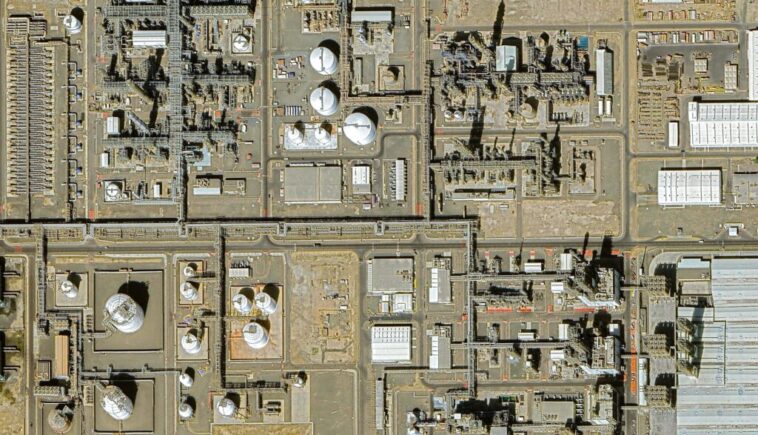

Saudi Arabia has accused Iran-backed militias operating from Iraq of launching a drone attack against critical oil infrastructure, marking another dangerous escalation in the Middle East and raising concerns about global energy security.
BREAKING: Saudi Aramco’s Abqaiq refinery has been struck by drones, causing a massive fire at the facility and the East-West Pumping Station. NASA FIRMS satellite imagery confirms extensive fire activity at the site.
Abqaiq is the world’s largest crude oil stabilization plant,… pic.twitter.com/2pxF02N47C
— The Hormuz Letter (@HormuzLetter) July 27, 2026
According to the Saudi Ministry of Defense, the kingdom’s air defense systems intercepted and destroyed several drones targeting oil facilities in the Eastern Province and areas near Riyadh. However, satellite imagery from NASA’s Fire Information for Resource Management System (FIRMS) shows significant heat signatures and active fires at Saudi Aramco’s Abqaiq processing facility, one of the world’s most important crude oil processing complexes.
Saudi officials described the incident as a “terrorist attack” carried out by militias backed by the Iranian regime and operating from Iraqi territory. Riyadh called on the Iraqi government to prevent its territory from being used as a launching pad for attacks against the kingdom and warned that Saudi Arabia “reserves the right to respond at the time and place of its choosing.”
Abqaiq: A Critical Hub for Global Oil Supplies
The Abqaiq facility, operated by Saudi Aramco, is the world’s largest crude oil stabilization plant and is estimated to process between 5% and 7% of the global oil supply. Any prolonged disruption at the site could have significant consequences for international energy markets.
Preliminary reports indicate that drones struck sections of the refinery and the East-West Pipeline Pumping Station, triggering a large fire. Satellite imagery has revealed multiple thermal hotspots and thick smoke rising from the facility, while Aramco reportedly initiated emergency flaring operations at several production sites to relieve pressure within the system.
Saudi authorities have not yet released an official assessment of the damage or confirmed whether oil production has been affected.
🇸🇦 Saudi Arabia vows to respond after accusing Iran-backed Iraqi militias of launching a drone attack on its energy facilities. https://t.co/GJJznVOhjD
— Ihtisham Ul Haq (@iihtishamm) July 27, 2026
Growing Pressure on Iran and Its Regional Proxies
The attack comes amid heightened regional tensions following recent confrontations involving the United States and Iran, as well as increased activity by Tehran-backed militant groups across the Middle East.
For years, the United States and several Western allies have accused Iran of funding, training, and equipping organizations such as the Houthis in Yemen and Shiite militias in Iraq, groups that have repeatedly targeted Saudi Arabia, Israel, and U.S. forces stationed throughout the region.
Although no group had formally claimed responsibility at the time of publication, Saudi officials say the evidence points to Iran-backed militias operating from Iraqi territory.
Echoes of the 2019 Attack
The latest strike recalls the September 2019 drone and missile attack on the Abqaiq and Khurais facilities, which temporarily cut Saudi oil production by more than half and triggered one of the sharpest single-day increases in global oil prices in decades.
While Yemen’s Houthi rebels claimed responsibility for that attack, the United States, Saudi Arabia, and several allies concluded that Iran had played a direct role in planning or supporting the operation—an allegation Tehran has consistently denied.
Oil Markets on Alert
Energy markets reacted cautiously to reports of the attack as investors weighed the possibility of further disruptions to global crude supplies.
Analysts warn that if damage to Abqaiq proves more severe than initially reported—or if retaliatory military action leads to a broader regional conflict—oil prices could rise significantly, increasing pressure on inflation and energy costs worldwide.
The latest attack once again highlights the vulnerability of critical energy infrastructure in the Persian Gulf to increasingly sophisticated drone and missile attacks. It also underscores the growing security challenge posed by Iran-backed proxy groups, whose expanding capabilities continue to threaten regional stability.
As Saudi Arabia assesses the damage and weighs its response, governments and energy markets around the world will be closely watching whether this latest attack becomes another isolated incident—or the beginning of a broader conflict with far-reaching geopolitical and economic consequences.
About The Author

Maria Herrera Mellado
María Herrera Mellado es una abogada y analista política muy respetada. Licenciada en Derecho en EE.UU. y España, también tiene un doctorado en Ciencias Jurídicas y varios títulos de la Universidad de Granada (España), de la Universidad de Arizona y de la Florida International University. Con amplia experiencia en derecho internacional, asesoría en inversiones, representación en inmigración, y protección de la privacidad y lucha anticorrupción, ha asesorado a organizaciones y políticos europeos, estadounidenses e hispanoamericanos. Ha escrito sobre seguridad nacional e inmigración, protección de datos, derecho constitucional, consumo financiero y derecho bancario en revistas internacionales y coescribió libros publicados en Perú y Colombia. Es reconocida por su servicio comunitario en EE.UU. y es considerada una de las mujeres más influyentes de Florida. Es experta en varios idiomas y participa frecuentemente en debates en canales como Univisión, Fox, France 24, Telemundo y es la Editora Jefe de Gateway Hispanic.