Disclaimer: This narrative reflects the firsthand observations, recollections, testimony, and preserved records of Linda Brickman related to Arizona’s 2020 election process. Some claims and interpretations discussed remain disputed and publicly debated.
We Still Need Sunlight to Help Restore Public Trust in Elections…
Linda Brickman was a veteran election worker, supervisor and trainer for over 20 years at the precinct level and at the Maricopa County Tabulation and Election Center (MCTEC) before becoming the Chairman of the Republican Party in Maricopa County during the 2020 Election.
It was with that background and experience that she worked at MCTEC during the 2020 Election cycle in various capacities, including Signature Verification, Adjudication, and the Duplication Rooms.
During the 2020 cycle, along with her co-workers, she experienced things she had never witnessed before.
Below are her firsthand recollections and perspectives of the 2020 Election and beyond.
In 2020, she never expected to become part of one of the most controversial elections in modern American history.
At the time, Ms. Brickman was serving as Chair of the Maricopa County Republican Committee and participated directly in multiple aspects of Arizona’s election observation and oversight process. What began as civic involvement quickly became something far more serious as questions emerged regarding election procedures, observer access, signature verification practices, and the certification of voting equipment used in Maricopa County.
For more than four years, public debate surrounding the 2020 election has largely been divided into two extremes: those who insist nothing went wrong, and those who believe the entire system was corrupted.
But lost in the middle are the firsthand witnesses — individuals who were physically present during portions of the process and who documented what they personally observed in real time.
This article is not based upon internet rumors, social media commentary, or secondhand speculation…
It is based upon those firsthand experiences, contemporaneous notes, sworn declarations, legislative testimony, official correspondence, and preserved records related to Arizona’s 2020 election process.
These materials even include communications involving public officials, election personnel, legislative bodies, and legal representatives associated with Dominion Voting Systems.
Reasonable people may ultimately reach different conclusions regarding the significance of the events described here…
However, public confidence in elections depends not only upon outcomes, but also upon transparency, accountability, procedural consistency, and the willingness to examine concerns raised by citizens who directly participated in the process.
What follows is a chronological review of documents, testimony, and firsthand observations connected to the administration of Arizona’s 2020 election in Maricopa County.
SECTION 1 — BEFORE THE ELECTION
In the months leading up to the November 2020 election, Arizona — like much of the nation — was operating under extraordinary circumstances. The COVID-19 pandemic had altered nearly every aspect of daily life, including questionable and rapidly revised election procedures, voting methods, public access, and election administration itself.
At the time, Linda Brickman was serving as the 1st Chair, then later, Chair of the Maricopa County Republican Committee (MCRC), one of the largest Republican County organizations in the United States. In that role, she worked with volunteers, election observers, party officials, and citizens seeking to better understand Arizona’s rapidly changing election procedures during an intensely polarized political environment.
Like many Americans, Brickman initially believed that Arizona’s election systems, procedures, and safeguards were designed to ensure fair and accurate elections regardless of political outcome. Her involvement in election observation efforts was not driven by expectations of controversy, but rather by a belief that public participation and transparency were important components of the electoral process.
However, as Election Day approached, growing concerns began emerging nationally regarding mail-in voting procedures, ballot verification standards, observer access, and the unprecedented procedural changes occurring in response to the pandemic.
In Arizona, many of those concerns became increasingly focused on Maricopa County, home to the state’s largest concentration of voters and one of the most heavily scrutinized election jurisdictions in the country.
And what followed after Election Day would place Maricopa County at the center of national attention — and would ultimately lead Brickman to document a series of concerns involving election observation, signature verification procedures, Logic and Accuracy testing, and certification processes connected to Arizona’s 2020 election.
SECTION 2 — INSIDE THE PROCESS
As the 2020 election process intensified, teams of observers, volunteers, political representatives, and election workers began spending long hours inside election-related facilities throughout Maricopa County. Public attention surrounding election administration had grown dramatically, and many citizens from both political parties were seeking reassurance that proper procedures were being followed consistently and transparently.
According to Brickman’s records and later testimony, concerns did not emerge from a single isolated incident. Instead, questions developed gradually through a series of observations involving election procedures, access limitations, communication issues, training processes, and inconsistencies that observers believed warranted additional scrutiny.
One area that drew increasing attention involved signature verification procedures for early ballots and the statutory requirements connected to Arizona’s ballot “cure” process under Arizona Revised Statute 16-550. Questions surrounding how signatures were reviewed, challenged, corrected, or confirmed became a major point of public controversy both before and after Election Day.
Brickman would later preserve multiple documents related to these concerns, including references to signature verification procedures, ballot curing practices, observer communications, and training materials distributed during portions of the election process.
Another recurring issue involved the ability of observers to meaningfully monitor portions of the process they believe should remain transparent to the public. Throughout the post-election period, debates intensified nationally regarding observer proximity, restricted visibility, procedural explanations, and whether election personnel were applying standards uniformly.
Supporters of Maricopa County election administration maintained that the election had been conducted lawfully under extraordinarily difficult circumstances created by the COVID-19 pandemic, unprecedented turnout, and operational pressures faced by election workers.
Critics, however, argued that procedural inconsistencies, communication breakdowns, and restricted oversight contributed to growing public distrust.
Within that increasingly tense environment, Brickman continued documenting observations, preserving records, and communicating concerns to party officials, legislators, and election authorities regarding issues she believed required further examination.
Those concerns would eventually intensify during one of the most significant events connected to election certification procedures in Arizona: The Logic and Accuracy testing process for Dominion voting equipment.
SECTION 3 — THE LOGIC & ACCURACY TESTING
Among the most consequential events described in Brickman’s records was her participation in the Logic and Accuracy (L&A) testing process connected to voting equipment used during Arizona’s November 2020 election.
Logic and Accuracy testing is designed to verify that election equipment properly records and tabulates votes before ballots are officially counted. The process is intended to provide public confidence that voting systems are functioning correctly and producing accurate results prior to certification.
According to Brickman’s declarations, testimony, and preserved records, concerns arose during portions of the L&A testing process that ultimately led her to refuse certification of the testing results.
That refusal would later become one of the “central events” connected to her public statements regarding the election.
Among the preserved materials is a copy of the actual L&A Testing Certificate bearing Brickman’s signature and notation declining certification.
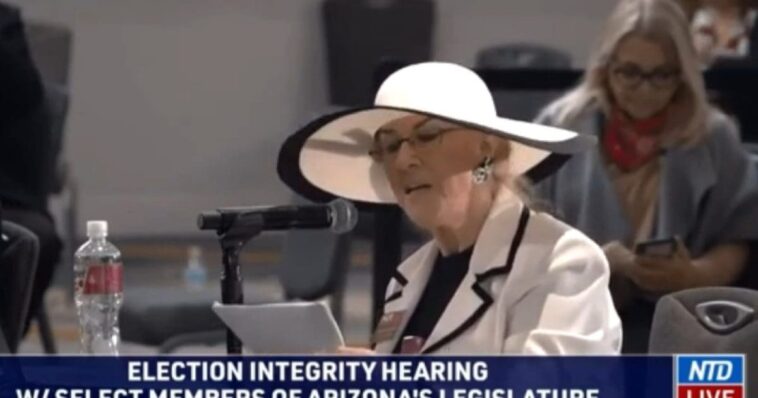
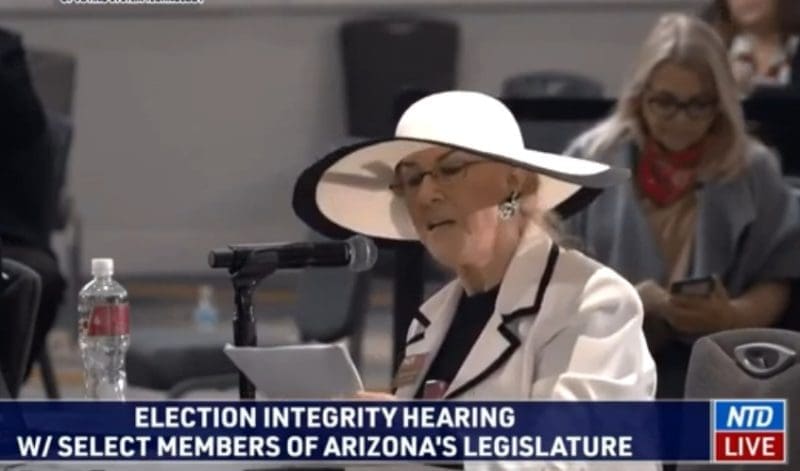
Brickman later described the events surrounding the testing process in legislative testimony and written declarations, including what she characterized as procedural irregularities, concerns regarding access and transparency, and questions involving the handling and operation of voting equipment during portions of the testing procedures.
The refusal to certify the testing process generated immediate controversy.
Supporters of Maricopa County election administration argued that the equipment had been properly tested and certified according to applicable procedures and that the election systems functioned accurately throughout the election…
Critics, however, viewed Brickman’s refusal as evidence that additional investigation and scrutiny were warranted.
See Ms. Brickman’s testimony after the 2020 election in front of Rudy Giuliani and the world.
Postscript from Ms. Brickman:
I understand that reasonable people may continue reaching different conclusions.
What I can say with certainty is that the events described in these pages were real to those of us who experienced them firsthand.
The meetings were real.
The pressure was real.
The testimony was real.
The documents were real.
And the decisions made in those moments carried consequences that extended far beyond politics.
I did not enter the 2020 election process expecting controversy, national attention, or legal threats. I became involved because I believed citizens had both a right and a responsibility to observe and participate in the electoral process honestly and transparently.
When concerns arose, I documented them.
When questions remained unanswered, I spoke publicly about them.
And when pressure was applied to remain silent, I chose not to remain silent.
History will ultimately decide how the events surrounding the 2020 election are remembered. My responsibility was never to determine history’s final judgment.
My responsibility was simply to tell the truth about what I personally witnessed, preserve the records I believed mattered, and leave future generations with an honest account of one of the most controversial periods in modern American election history.
It is my HOPE that the TRUTH will eventually PREVAIL!
Linda Brickman
PS: I still wear a hat every day.