

The Constitution’s decision to vest the executive power in one President was no accident of drafting or mere administrative convenience.
The Framers rejected an executive council in favor of a single magistrate who could act with energy, yet be held responsible for the government’s conduct.
That design embodies a principle too often obscured in modern debates over the administrative state: power and accountability must travel together.
It does not mean a President may govern by personal whim; it means officers exercising executive authority must remain answerable, through a clear chain of supervision, to the official charged with executing the laws.
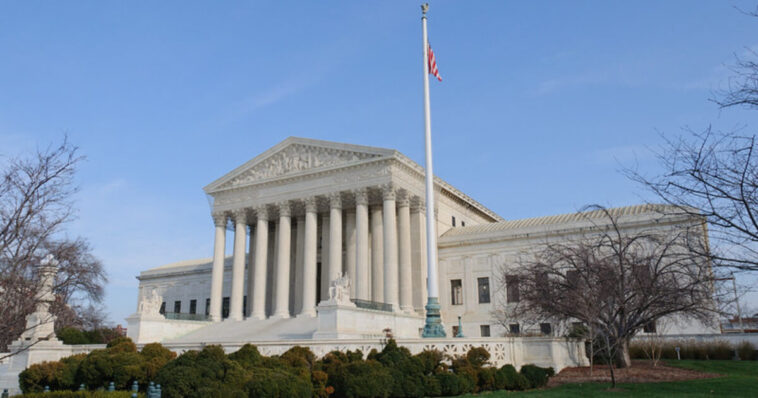
The Supreme Court’s June 29, 2026 decision in Trump v. Slaughter gives that design renewed force. The Court held that statutory restrictions limiting the President’s removal of Federal Trade Commission commissioners to specified forms of cause violated the separation of powers.
In doing so, it overruled Humphrey’s Executor v. United States, the 1935 decision that had sustained removal protections on the premise that the FTC performed functions distinct from the executive power.
That premise could not survive the modern agency: an entity armed with substantial rulemaking, enforcement, and adjudicatory authority exercises governmental power of an executive character, whatever label Congress places upon it.
At the heart of the dispute lies a basic constitutional incongruity. Article II makes the President responsible for seeing that the laws are faithfully executed; yet the arrangement the Court rejected allowed the President to be held accountable for an agency’s conduct while denying him meaningful authority over the officials directing it.
Responsibility without supervision is responsibility in name only. Voters cannot fairly judge an administration for decisions made by officers whom the President is powerless to direct or remove. The unitary-executive principle restores the necessary connection between authority and accountability.
Nor is this merely a modern theory devised to enlarge presidential power. The First Congress confronted the question directly. James Madison argued that removal authority had to reside in the President because only then would responsibility run in an intelligible line from subordinate officials, through the chief executive, and ultimately to the people.
The so-called Decision of 1789 became an important foundation for presidential supervision. Myers v. United States later gave judicial force to that understanding; Humphrey’s Executor carved out an exception for certain independent commissions. Trump v. Slaughter now removes that exception as applied to the FTC.
To be sure, the decision does not abolish Congress’s authority to organize the government. Congress may establish offices, define duties, prescribe qualifications, and adopt administrative procedures; the Constitution does not require every federal employee to serve at the President’s pleasure.
The question is when a statutory safeguard ceases to be a permissible feature of administration and becomes a barrier between the President and the exercise of executive power.
Slaughter supplies a consequential answer for the FTC, but it does not categorically resolve every dispute involving every board, commission, or subordinate officer. Those questions will turn on the powers exercised and the statutory arrangement at issue.
There is, nevertheless, a legitimate concern on the other side of the ledger. Presidential supervision can sharpen democratic accountability, but it also places substantial authority in one elected official. Expertise, continuity, and protection against arbitrary decisionmaking are not trivial interests.
Yet they cannot justify a parallel executive apparatus whose officers wield the regulatory power of the state while remaining insulated from presidential supervision.
The proper safeguards are lawful limits, congressional oversight, judicial review, transparent procedures, and ultimately the electorate—not an arrangement that disperses authority so thoroughly that responsibility disappears with it.
The unitary executive is often caricatured as a license for unlimited presidential power. Properly understood, it is almost the opposite: a rule for identifying who is responsible when the government acts.
Trending: Bennie Thompson Tried to Bait Trump’s FBI Into Naming a “Right-Wing Terrorist Organization” — It Blew Up in His Face (VIDEO)
Congress legislates and appropriates; the President executes the laws through officers subject to constitutionally adequate supervision; and the courts resolve cases and enforce legal boundaries.
The branches are distinct, and their powers are not interchangeable. The point is not to make the presidency supreme over the constitutional order, but to prevent executive power from being exercised by officials who are, in practical effect, beyond the reach of the executive.
Trump v. Slaughter is a consequential turn in the law of the administrative state, though its full reach will emerge only as courts apply its reasoning to other agencies and Presidents decide how responsibly to exercise the authority it recognizes.
The question is not whether government should be administered by experts, nor whether Congress may design institutions to carry out federal law.
It is whether those entrusted with executive power may be placed beyond meaningful presidential accountability. The
Constitution’s answer begins with its text: the executive power is vested in one President—not scattered among officials answerable to no one in particular.
Ad block users: Some site features may not work correctly while an ad blocker is enabled, because they break scripts and content this website depends on. If you can’t see comments below, for example, please disable your ad blocker.