
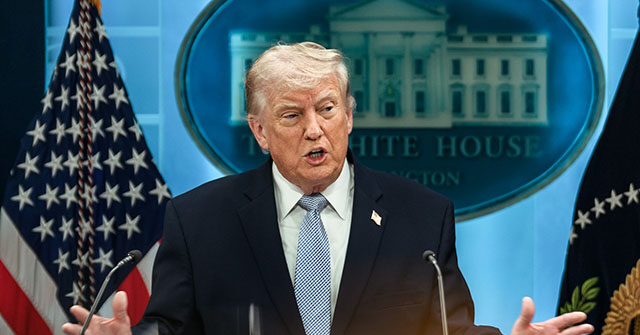
President Donald Trump said Sunday that renewed U.S. military strikes against Iran are “highly unlikely” if negotiations produce a strong agreement, while warning that American forces remain ready to launch another major offensive if necessary.
In an interview with CNN, Trump cited the devastating losses inflicted on Iran’s military, coupled with mounting economic pressure from U.S. sanctions and a sweeping naval blockade, as reasons he expects Tehran to reach an agreement without the need for further major strikes.
Asked whether he would order renewed strikes, Trump said the decision depended on Iran signing “a very strong agreement,” adding that further military action was “highly unlikely” to be necessary but that he would authorize it if needed.
Trump maintained that Washington could inflict considerably more damage if necessary. “They’re withering away financially. We’ve hit them militarily. We could finish them off,” he said.
The president emphasized the readiness of American forces for another offensive, noting that a third U.S. aircraft carrier had just arrived in the region. “We’re ready for it,” he said, describing all three carriers as “fully locked and loaded.”
He further asserted that American strikes had destroyed Iran’s air defenses and severely crippled its ability to manufacture missiles and drones, estimating that the regime’s missile production had fallen to roughly ten percent of its previous capacity and drone production to approximately 15 percent following strikes on its weapons factories.
Trump’s remarks followed a weekend in which Israel and the United States prepared for possible renewed American strikes against Iran, although the president ultimately issued no attack order, according to sources cited by the Jerusalem Post.
Prime Minister Benjamin Netanyahu held consultations with senior Israeli security officials Friday as preparations for a possible American strike continued, the report said, with U.S. forces also preparing for renewed operations.
Two diplomatic sources told the outlet that Trump had given Vice President JD Vance and other senior administration officials “a few days” to reach an agreement with Tehran, as Washington continued weighing its diplomatic and military options.
During his CNN interview, Trump warned that American forces could destroy dozens of Iranian bridges within an hour, while stressing his reluctance to devastate infrastructure that could take years to rebuild.
“We have 38 bridges in our sight that we can knock down in literally one hour,” Trump said. “They’ll all be down.”
The president said he wanted to avoid destroying the bridges because rebuilding them could take a decade, particularly given Iran’s mountainous terrain and the difficulty of replacing major transportation infrastructure.
Speaking to reporters later Sunday, Trump extended that warning to Iranian power plants, saying another major offensive could leave the country facing 10 to 15 years of reconstruction.
He stressed that he would prefer to avoid inflicting such widespread destruction on Iran’s civilian infrastructure. “That puts an awfully big burden on the people. I don’t like that,” he said.
In a separate 60 Minutes interview aired Sunday, Trump said Washington and Tehran had been close to reaching an agreement before last week’s midterm elections, which he maintained had encouraged Iran to hold out for more favorable terms.
“We would’ve had a deal, except for this election,” Trump said, adding that he still expected an agreement.
Asked whether he intended to escalate military operations following the elections, Trump replied, “I’m not looking to. I don’t think there’s any reason to.”
The president stood by his decision to launch the military campaign against Iran, maintaining that preventing the regime from obtaining nuclear weapons outweighed the political consequences. Asked whether he would make the same decision again, Trump answered with an “emphatic yes,” insisting that Iran could never be allowed to obtain a nuclear weapon.
He said American forces were continuing to monitor the three Iranian nuclear sites previously struck by U.S. bombers, along with Pickaxe Mountain, a heavily fortified underground facility that has not been targeted.
Trump maintained that there had been little activity at Pickaxe Mountain and that American forces could strike the facility quickly if necessary, although he saw no immediate need to do so.
Washington is also intensifying its economic campaign against Iran, combining sweeping sanctions and a naval blockade with new measures aimed at cutting off the regime’s remaining military supply routes.
U.S. Central Command announced Saturday the establishment of Task Force Iron Gate, a new initiative targeting weapons, restricted technology and illicit financial flows through Iran’s land routes, complementing the existing American naval blockade.
Speaking to reporters Sunday evening, Trump said the new operation and the naval blockade were choking off Iran’s remaining supply routes, placing additional pressure on Tehran to reach an agreement.
The president cited inflation exceeding 300 percent and said Iran was struggling to pay its soldiers and Revolutionary Guard personnel, maintaining that the regime’s worsening financial crisis would eventually compel Tehran to accept an agreement.
“They have no money, and they’re not doing well, and at some point they’re going to be reasonable,” Trump said.
Vice President JD Vance has assumed a leading role in the diplomatic effort, maintaining frequent indirect contacts with regional intermediaries as the administration seeks an agreement addressing Iran’s nuclear program and the broader conflict, Axios reported.
The negotiations have involved Qatar and Pakistan as key intermediaries, with Trump speaking Friday to Qatar’s emir, Sheikh Tamim bin Hamad Al Thani, as senior administration officials continued working to narrow the differences between Washington and Tehran.
Secretary of State Marco Rubio warned Sunday that negotiations remained far from a breakthrough, dismissing Tehran’s demands as “outrageous and ridiculous and really not realistic.”
“I wouldn’t say we’re at the verge of a breakthrough,” Rubio told reporters before departing for Paris.
Rubio maintained that Trump preferred a diplomatic settlement, while acknowledging that Tehran’s demands could prevent negotiations from succeeding.
“The president would always prefer to solve this and every problem diplomatically,” Rubio said. “Sometimes that’s not possible, unfortunately, but if there’s a chance to do it we’ll explore it.”
Tehran has continued demanding relief from U.S. sanctions and the naval blockade, access to frozen Iranian assets and an end to hostilities across the region, while resisting Washington’s conditions for an agreement addressing its nuclear program.
Iranian Foreign Minister Abbas Araghchi said Sunday that regional mediators had suspended their travel following the U.S. midterm elections, attributing the pause to uncertainty over the political fallout from Republican losses.
Araghchi separately reiterated Iran’s proposal for reciprocal steps within two days, insisting that Washington meet Tehran’s conditions, including an end to hostilities on all fronts, while warning of military retaliation if the United States chose further strikes.
“American voters have made their choice. Time for the White House to make its own,” Araghchi wrote. “Our 2-day proposal stands: meet the requirements, including end to war on all fronts, and you will see results. Or choose war, and see our alert and battle-hardened Warriors rain down hell.”
The latest exchanges come ahead of Trump’s scheduled White House meeting Monday with Qatari Prime Minister Sheikh Mohammed bin Abdulrahman Al Thani, whose government has played a central role in the indirect negotiations.
The meeting comes as Washington maintains its military readiness and intensifies pressure on Tehran, while regional mediators seek to secure an agreement that could avert another major U.S. offensive.
Joshua Klein is a reporter for Breitbart News. Email him at jklein@breitbart.com. Follow him on Twitter @JoshuaKlein.