I remember the morning of September 11 distinctly. It was a Tuesday. It was bright and sunny. Our professor wheeled a television into our computer science classroom. As soon as we saw another plane crash into the second tower, we knew that America was under attack.
It was a defining moment for our nation and for me. I was in my first year at West Point, and from that moment on, my classmates and I knew we would spend the rest of our time at the United States Military Academy preparing for war.
But what made it personal was learning that the terrorists used the Hudson River to navigate their way to New York, essentially flying over West Point.
Everyone handled the attacks differently. West Point held a special vigil for the victims of 9/11. Traditionally, a Taps vigil is reserved for a cadet who dies while at West Point. This time, the administration opened the candlelight vigil to the public for the first time. I was struck by a group of active-duty instructors who defied orders and left after class each day to search for survivors in the rubble. I couldn’t go with them, so I coped by working. I wanted to learn everything I could so that when I finally confronted the terrorists responsible, there would be no question about who would win that fight. I remember writing to my family on AOL Messenger that very night, “The hand of American justice will be swift — America’s resolve is steadfast.”
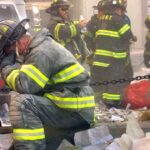
Most Americans made a vow after 9/11 to never forget, but the truth is, we can’t forget. The images of the Pentagon on fire, of people jumping from the Twin Towers, of dust filling Manhattan after the towers came crashing down, of hero firefighters on top of the rubble, and of the American flag flying over it all are seared into our minds. They aren’t just memories; they have fundamentally shaped who we are and how we see the world.
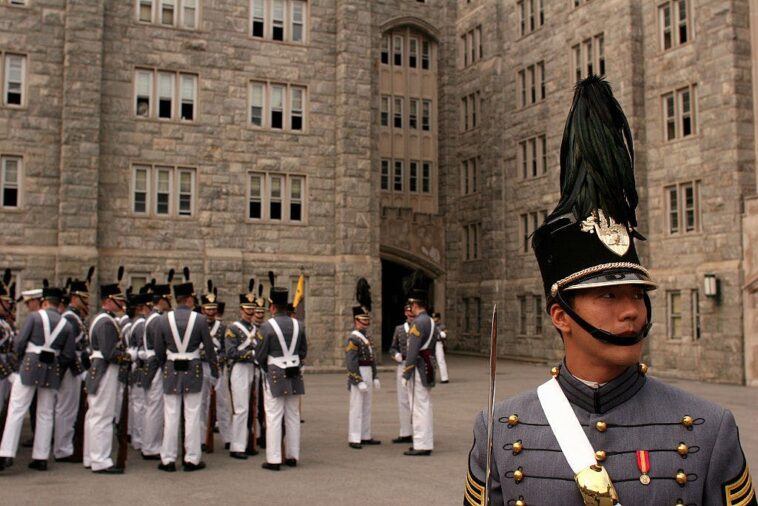
In 2005, the year we graduated, Time Magazine featured our class. They called us the class of 9/11. And as if by Providence, we graduated with exactly 911 cadets. Time’s article got many things right, but it wasn’t the whole story. Parading across the Plain on graduation morning was only the beginning. The real story began once we deployed to war.
Fortunately, while at West Point, many of our instructors cycled through active combat roles in between teaching. This, along with the creation of the Combating Terrorism Center, gave us a taste of what we’d be up against. As one instructor who had just come back from the battlefield told Time, “What these cadets don’t know is that I’m secretly teaching Iraq every second of every day.” That real-world instruction proved invaluable once we reached the battlefield.
I was honored to serve with many of my West Point classmates during the 2008 surge into Iraq and beyond. We all learned what it means to be soldiers and then what it means to be leaders.
Five years into my service, I joined the 160th Special Operations Aviation Regiment (SOAR). Our mission was to go after high-value terrorist targets in Afghanistan. One mission stands out. We were going after a high-level terrorist in northeastern Afghanistan near the Pakistan border. I was the air mission commander and part of a flight of MH-47s. As we entered a valley to extract the ground force, I had a feeling that something wasn’t right. Suddenly, an RPG struck our refueling probe. By the grace of God, it didn’t explode. My crew immediately did exactly what they had been trained to do. They engaged the enemy, communicated with the supporting aircraft, and helped get the situation under control. We had a split second to decide what to do next, and chose an alternate route over the mountain and out of the valley. This mission was formative. It taught me how important it is to have a team you can trust. None of us would be here today if even one of us hadn’t done our job. That is a lesson West Point teaches, but it’s not something you can truly understand until you’re on the battlefield.
I’ve been asked since the fall of Afghanistan if the war was worth it. That’s complicated, but ultimately, my answer is yes. While watching the Taliban invade Kabul and then parade through the streets with the same U.S. military equipment we used to fight them was uniquely painful, I am still confident that we did good in Afghanistan. After watching those towers fall, none of us could rest until Osama bin Laden was found and his network destroyed — and that’s exactly what we did in Afghanistan.
From the moment I took my affirmation oath at West Point to my last flight in Afghanistan, nothing mattered more to me than the mission. I was raised by a Vietnam veteran who sacrificed his health, and ultimately his life due to Agent Orange, for this country. For 10 years, the only thing that mattered was finding and disrupting terrorist networks. Before 9/11, my West Point class picked a motto: “Class of 2005, Keeping Freedom Alive.” My classmates and I lived that motto during Operation Enduring Freedom in Afghanistan and during Operation Iraqi Freedom.
That being said, I’m not blind to the sacrifices the War on Terror required — and still requires today. One cadet told Time magazine that he majored in economics because it’s a marketable skill. He went on to say, “Hopefully, I’ll be alive to use them.” My West Point classmates and I had stood in our mess hall in silent attention over 20 times since September 11 to commemorate the death of a fallen graduate. This prepared us more than anything for the sacrifice required of us. Yet after graduation, things became even more real. Some of the bravest men and women I studied and trained with at West Point did not survive the War on Terror, and many of those who did survive carried mental, emotional, and physical scars.
This year, as we commemorate the 25th anniversary of that September day, I can’t help but think back to my time at West Point and the message I sent to my family that night about American resolve. We need that resolve now more than ever. September 11 taught us that terrorism is not contained to one country or one region. Today, “Keeping Freedom Alive” is more than just a motto; it is a solemn responsibility for every American and one we must pass on to the next generation.
***
Congressman Matt Van Epps is a member of the U.S. House of Representatives, representing Tennessee’s 7th Congressional District. After graduating from West Point, he served 10 years on active duty, including nine combat tours as an Army aviator, deploying to Iraq and Afghanistan and flying the AH-64D Apache and MH-47G Chinook with the 160th Special Operations Aviation Regiment. He continues to serve in the Tennessee Army National Guard and brings his military, public-sector, and private-sector experience to Congress, where he serves on the House Committee on Homeland Security as well as the House Committee on Science, Space, and Technology.