
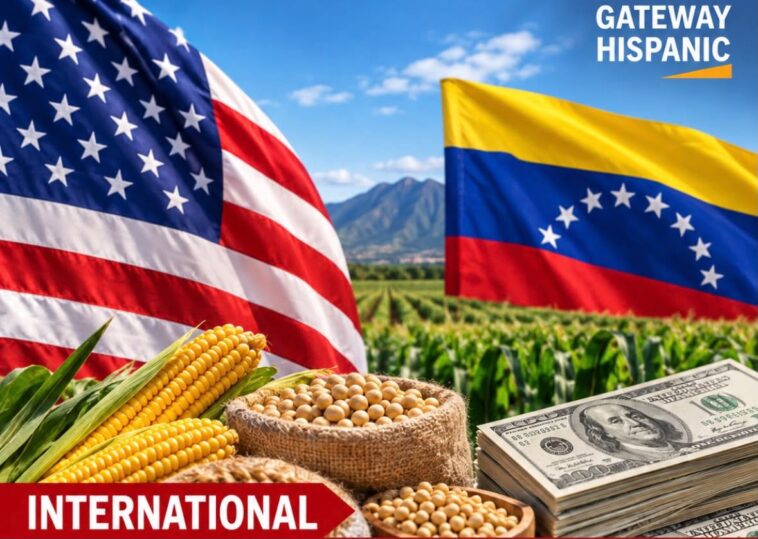

The Trump administration’s investments in Venezuela are moving at a rapid pace. After major oil agreements in recent months—including U.S. stakes in reserves, equity participation, and purchase commitments—Washington has now opened a new front: agriculture.
This Thursday, the U.S. Department of Agriculture’s Foreign Agricultural Service (FAS) announced an expanded package of trade, development, and food security opportunities targeted at Venezuela. The goal is to make it easier and more attractive for Venezuelan buyers to purchase American farm products, delivering clear benefits to U.S. farmers and exporters.
USDA is expanding opportunities to strengthen trade and food security in Venezuela with export financing, market development, technical fellowships and food assistance—putting FAS tools to work for U.S. agriculture. https://t.co/uyWJWxI5yE
— Foreign Ag Service (@USDAForeignAg) September 10, 2026
Venezuela is already a meaningful market for U.S. corn, soybeans (and products such as soybean meal and oil), wheat, and other commodities. In 2025, U.S. agricultural exports to Venezuela totaled approximately $756–762 million, ranking the country among the top 33–35 destinations for American farm goods. The administration wants that market to grow substantially.
How the New Package Works
The centerpiece is financial. Washington will use the GSM-102 Export Credit Guarantee Program, run by the Commodity Credit Corporation. This does not involve direct cash transfers to Venezuela. Instead, the U.S. government provides public credit guarantees that reduce risk for financial institutions financing the deals.
This makes it far easier for Venezuelan importers to secure loans to buy U.S. agricultural products such as wheat, corn, soybeans, and rice.
Additional steps include lifting restrictions so any approved foreign bank can back Venezuelan transactions, expanding the available credit pool.
The package also includes technical assistance and training programs, including fellowships for Venezuelan regulators and agricultural operators.
Washington is also offering market promotion support, including potential inclusion in regional agribusiness trade missions, market research, and consumer promotion activities funded through programs such as the Market Access Program.
Venezuela could also potentially be added to larger U.S. food assistance and food security programs, particularly as the country recovers from the June 2026 earthquakes.
A USDA report estimates that Venezuela will need to import about 1.5 million metric tons of wheat during the 2026–2027 marketing year, representing a 10% increase. The country is also expected to consume roughly three million tons of corn, while its domestic agricultural sector continues to face inflation and high input costs.
Clear Winners: American Farmers
U.S. growers and exporters of grains and oilseeds stand to gain the most. Venezuela is already a solid buyer of American corn and soybeans.
The new credit guarantees lower barriers in a market that, after years of economic crisis and uncertainty, relies heavily on imports for basic food and feed needs.
Under Secretary for Trade and Foreign Agricultural Affairs Luke J. Lindberg emphasized the Trump administration’s commitment to Venezuela’s economic recovery and to positioning U.S. agriculture to meet critical needs while building lasting commercial relationships.
This agricultural push fits into the broader strategy of economic re-engagement following the political changes in Venezuela earlier in 2026.
President Trump had previously indicated that revenue from Venezuelan oil deals should prioritize purchases of American-made goods, including agricultural products. The USDA is now turning that policy into practical tools.
The GSM-102 program is a longstanding U.S. tool for expanding agricultural exports into emerging markets. In 2022 alone, it supported $3.4 billion in sales of commodities such as corn, soybeans, wheat, and cotton.
While any credit guarantee program carries some risk of default—which could ultimately fall on U.S. taxpayers—USDA officials note that the program’s historical default rate is “exceedingly low.”
In short, after the oil deals, Washington is accelerating agricultural integration with Venezuela.
When I led a U.S. delegation to Venezuela following the recent earthquakes, I saw firsthand the opportunities ahead. @USDA is putting our trade, financing, technical assistance and food security tools to work—helping meet critical needs while building new opportunities for…
— Luke J. Lindberg (@UnderSecTFAA) September 10, 2026
For American farmers looking for new or expanded export markets, this represents a tangible opportunity at a time when the administration is prioritizing agricultural trade growth.
About The Author

Maria Herrera Mellado
María Herrera Mellado es una abogada y analista política muy respetada. Licenciada en Derecho en EE.UU. y España, también tiene un doctorado en Ciencias Jurídicas y varios títulos de la Universidad de Granada (España), de la Universidad de Arizona y de la Florida International University. Con amplia experiencia en derecho internacional, asesoría en inversiones, representación en inmigración, y protección de la privacidad y lucha anticorrupción, ha asesorado a organizaciones y políticos europeos, estadounidenses e hispanoamericanos. Ha escrito sobre seguridad nacional e inmigración, protección de datos, derecho constitucional, consumo financiero y derecho bancario en revistas internacionales y coescribió libros publicados en Perú y Colombia. Es reconocida por su servicio comunitario en EE.UU. y es considerada una de las mujeres más influyentes de Florida. Es experta en varios idiomas y participa frecuentemente en debates en canales como Univisión, Fox, France 24, Telemundo y es la Editora Jefe de Gateway Hispanic.