
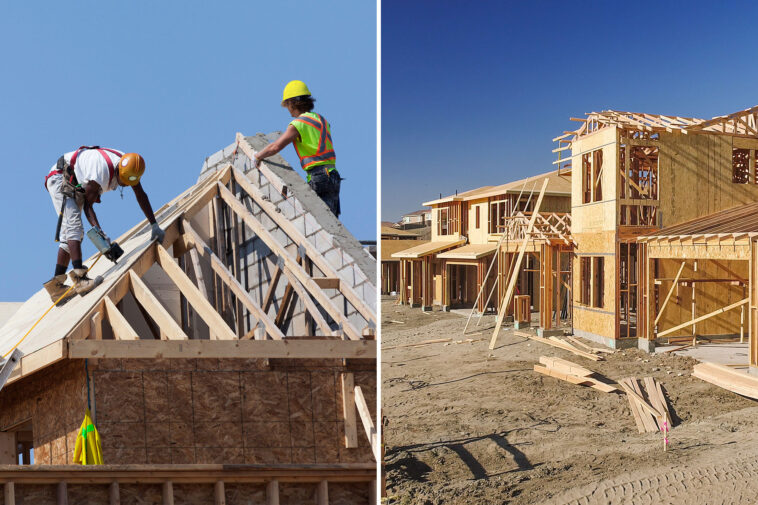
California has added a staggering 677,000 new homes over the past six years — all while the number of residents barely budged, growing by just 39,000 people, according to new data.
On the surface, that sounds like a turning point in the state’s long-running housing crisis. More homes and hardly any new residents should mean relief, but other factors, tell another story.
Despite the construction surge, Californians are still grappling with sky-high rents, brutal competition and limited availability.

The reason is more complicated than simple supply and demand — and it has a lot to do with how people are living.
“Even though the state is adding more housing units than people, it was in such a deep hole that the recent successes in homebuilding are not enough to truly move the needle,” Joel Berner, senior economist at Realtor.com said.
At the heart of the issue is what experts describe as a quiet but powerful demographic shift: households are shrinking.
Download The California Post App, follow us on social, and subscribe to our newsletters
California Post News: Facebook, Instagram, TikTok, X, YouTube, WhatsApp, LinkedIn
California Post Sports Facebook, Instagram, TikTok, YouTube, X
California Post Opinion
California Post Newsletters: Sign up here!
California Post App: Download here!
Home delivery: Sign up here!
Page Six Hollywood: Sign up here!
In simple terms, it’s not just about how many people live in California — it’s about how they live. Where multiple people once shared a single home, more are now opting to live alone or in smaller groups. That means the same number of residents suddenly requires far more housing units.
“Fewer people living under the same roof means more roofs are required for the same number of people,” Berner said, adding that demographic shifts like this can produce exactly the pattern California is seeing now.
This household splitting trend is being driven by two major forces: declining birth rates and an aging population. Fewer families are raising children, while more older adults are staying in their homes longer — often in smaller households of one or two people.

California’s birth rate is near a historic low, dropping from 613,000 births in 1992 to about 420,000 in 2021, slowing population growth for years to come. On the other hand, By 2040, California’s population aged 65+ is projected to grow 59%, rising from 5.7 million to over 9 million.
The result is that larger homes are effectively taken off the market, while demand surges for smaller units, apartments and starter homes — all of which remain in short supply.
At the same time, California is still digging itself out of a decades-long housing deficit.
The homes that are being built aren’t always the ones most people can afford.
Sign up for the California Morning Report newsletter
California’s top news, sports and entertainment delivered to your inbox every day.
Thanks for signing up!
A significant share of new construction caters to higher-income buyers, leaving lower- and middle-income Californians with limited options. That mismatch continues to fuel affordability issues across the state.
There’s also the issue of vacancies — or rather, the lack of them.
In a healthy housing market, a higher number of empty units forces landlords to compete, which can help drive prices down. But in California, vacancy rates remain stubbornly low.

The state’s rental vacancy rate sits at just 4.3%, compared to 5.9% nationwide, meaning available units are quickly snapped up and pricing power remains firmly in the hands of landlords.
Still, there are small signs of progress.
Young adults — long squeezed by high housing costs — are beginning to form their own households again after years of delays. It’s a tentative signal that increased construction may be starting to ease some pressure, even if only slightly.
Policymakers have also taken steps to boost supply, particularly by encouraging the construction of accessory dwelling units, or ADUs.
“The state has made significant progress from a policy perspective on encouraging ADU construction in recent years, for which it should be commended,” adds Berner. “The state has made efforts to lift local restrictions on ADUs, which is helping it to deliver more and more of them where they are needed the most.”
But even with those efforts, the bottom line remains unchanged.
“The pace just isn’t fast enough,” he says.