
See more of our coverage in your search results.

Before Junior Seau died by suicide in 2012, his family wondered what effect all the hits he laid on opponents over the course of a 20-year NFL career had on his increasingly erratic behavior.
A year earlier, another former NFL player, Dave Duerson, penned a note before shooting himself in the chest: He wanted his brain studied for signs of chronic traumatic encephalopathy, or CTE, the neurodegenerative disease linked to repeated blows to the head.
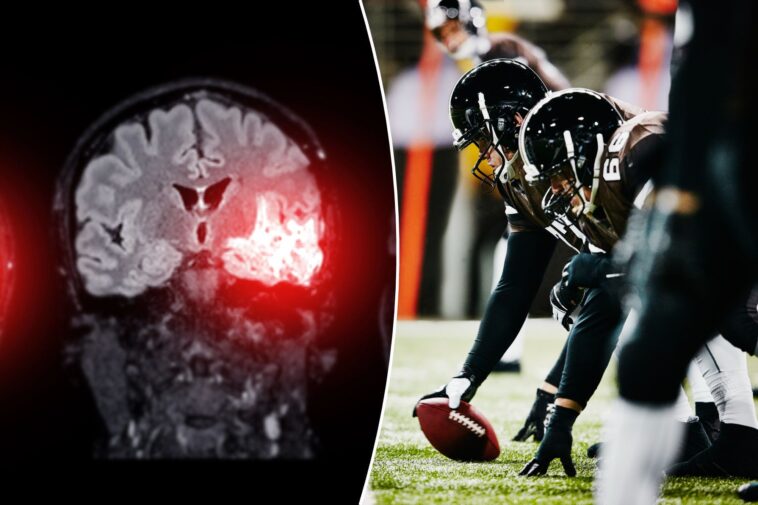
In both cases, as well as in three-quarters of more than 2,300 former NFL players in a study published last month, samples of posthumous brain tissue showed signs of late-stage CTE.
There has been no way to diagnose CTE in living people, but that may be about to change, thanks to a new, groundbreaking finding from Boston University’s CTE Center.

In an NIH-funded study published Thursday in the Journal of the American Medical Association, researchers claim to have discovered a way to diagnose the disease with a simple blood test.
One of the neurologists from the study cautioned that the finding was only preliminary and would need to be replicated. But the initial evidence was strong enough that the longtime brain doctor said he got goosebumps.
“This is really a game changer because it is the first time that we have a test that is possible to give to living people that can detect this pathology,” Dr. Gil Rabinovici, a neurologist at UC San Francisco who co-authored the study, told the California Post.
“Sometimes you see data and you scratch your head, like what does this mean?” Rabinovici told the Post. “When you see the kind of data that we have in this paper, the finding is so clear and the implications are so apparent, that’s why you get goosebumps.”

In the study, researchers looked at blood samples taken from 21 former American football players whose brains had previously been examined in autopsies. The group consisted of 12 former NFL players, seven who played in college and two who played in high school.
Of the 21, 16 of them had late-stage CTE and two others were in the early stage of the disease.
When they analyzed the blood of the former players, they found that the 16 late-stage patients had significantly higher levels of a specific tau protein — eMTBR-tau. Previously, doctors had identified CTE cases after death by abnormal levels of tau — known as tangles — in brain tissue. Advances in technology allowed them to isolate the biomarker in blood samples.

“We’ve tried all kinds of imaging and spinal fluid tests and looked at a variety of things” to diagnose CTE in living people, Rabinovici said. “Nothing has ever shown a clear signal until now. … This is the first, most promising data that I’ve ever seen on a biomarker.”
Rabinovici, who began studying Alzheimer’s 25 years ago, sees the breakthrough opening the door to “follow the same playbook” for patients suffering from CTE. Back then, there was no clinical test to diagnose the disease in living people; now, he said, there is “really exciting” research being done on ways to treat the disease and potentially even reverse its progression.

“Could that work for people living with CTE? Well, until we have a way of diagnosing the disease in living people … we have no way of even doing the clinical trial,” he said. “This may unlock the possibility of having clinical trials and testing some of these promising therapies.”
A growing amount of research over the past two decades, largely spearheaded by Dr. Ann McKee at Boston University, has shown the overwhelming prevalence of CTE in former football players. It has also been present in other athletes in contact sports and military veterans.

A diagnostic test as simple as a blood sample could also help understand the extent.
“You can imagine it’s very doable to screen thousands or tens of thousands of people at risk with a blood test,” Rabinovici said. “This really could unlock a massive amount of research in terms of understanding how common is this? Who’s at risk? Who’s somehow protected and why? Giving people a diagnosis, yes or no, if they’re worried about it.
“And, importantly, unlocking the ability to develop treatments.”

First, the groundbreaking finding has to be verified. It was hard enough to find 21 former players who both had their brains autopsied and had blood samples taken during their lives.
Fortunately, Rabinovici and his team at UCSF, in conjunction with five other sites around the U.S., will hit the ground running. In addition to reaching out to brain banks “around the world,” they have already recruited more than a hundred living football players for the second trial of their DIAGNOSE CTE research project, which got underway last year.
The players are all being monitored and have all agreed to donate their brains after death.
“We’re working with data that we already have from the living players to see if the blood test correlates with things that we know go along with [CTE],” Rabinovici said, such as years of football exposure, cognitive impairment and atrophy on brain scans. “I think there’s a lot more that’s going to come in the next year or two to validate this and hopefully bring it into the clinic.”