See more of our coverage in your search results.
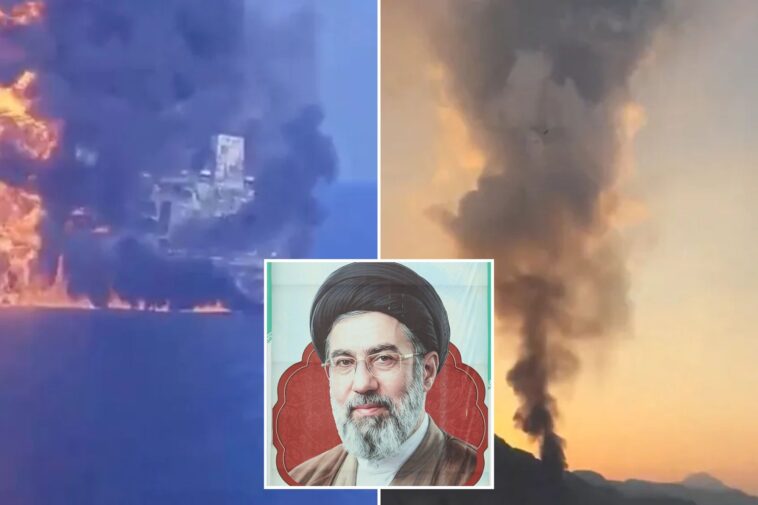
Iran is escalating its attacks in the Middle East as a means to reclaim its control over the Strait of Hormuz and force the US into action for a conclusive end to the war, according to multiple reports.
With about 8 million barrels of oil still exiting through the strait every day under a US naval escort, Iran has stepped up its attacks on tankers to try and stop the flow.
At least six strikes have been confirmed by the United Kingdom Maritime Trade Operations in the past week, with Iran claiming even more attacks at a pace not seen since the war first began.


Tehran has repeatedly stated that it would not allow ships to undermine its claim to the oil chokehold, with Iran specifically targeting the busiest ships that have been making the dangerous back-and-forth trips, according to the Vortexa maritime firm.
The Islamic Republic has also targeted US bases in Bahrain and Kuwait in recent days, a clear escalation meant to challenge the current status quo.
While Trump has signaled that he is content with allowing the war to remain cold as America’s economic pressure campaign squeezes Iran, the Islamic Republic does not have the luxury to wait around.
“The two sides have very different calculations about the costs of prolonging the confrontation,” Hamidreza Azizi, senior Iran analyst at the International Crisis Group, told Al Jazeera.

“As economic pressure mounts, Iran may become increasingly willing to take military risks to break the deadlock.”
Lead Iranian negotiator Mohammad Bagher Ghalibaf signaled this very stance during his address to parliament on Sunday, warning the US that lawmakers were told by Supreme Leader Mojtaba Khamenei to end the current stalemate.
“We will not remain in a state of ‘neither war nor peace,’” Ghalibaf said. “It makes absolutely no difference to us whether the United States wants negotiations or war.”

The attacks also serve as a way for Iran to show the US and its allies that Tehran has rebuilt its missile and drone launchers and is prepared for all-out war to resume, Kristian Coates Ulrichsen, a Middle East expert at Rice University’s Baker Institute, told the Wall Street Journal.
“The attacks on Kuwait and Bahrain are a signal that Iran retains both the capability and the intent to target US partners across the Gulf and are a reminder to leaders in the Gulf states that they remain vulnerable to retaliation for U.S. actions in the Strait of Hormuz,” Coates Ulrichsen said.
“As the Trump administration continues its buildup of force in the region, the attacks are a reminder that the US does not have a monopoly on the escalation ladder,” he added.