
News of the World: What you missed this week internationally

THAILAND
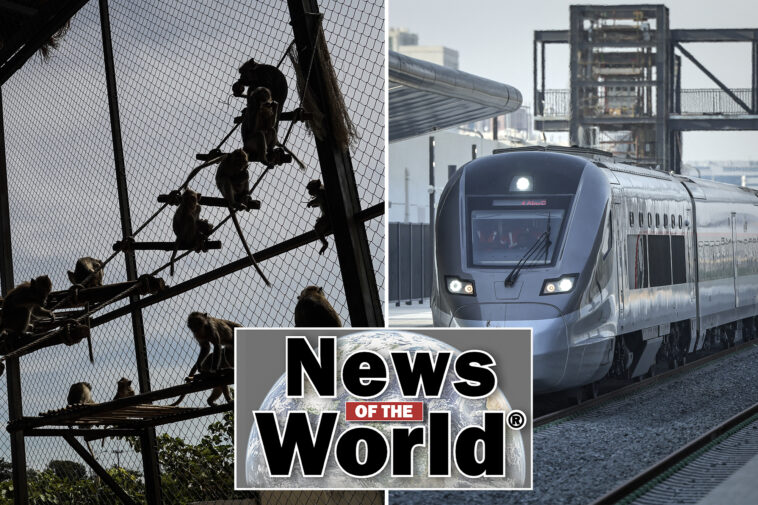
They were on a wild monkey chase. Nearly 100 brazen monkeys escaped from their enclosure at Lopburi Municipality Animal Nursery this week and wandered free around central Thailand. This prompted a massive search team of local authorities, which had to use food-baited cages and in some cases, tranquilizer darts, to capture them. Staff at the Mueang Lopburi district facility, known for its free-roaming primates, scrambled to keep their more than 1,000 other creatures from bolting as well.

MEXICO
A massive crowd of 1 million gathered in downtown Mexico City Tuesday to celebrate Mexico’s 2-0 victory over Ecuador, leading to the deaths of four people who were crushed in the crowd. This prompted the city to take precautions for future games by closing metro stations, other public transportation, as well as some streets, to prevent overcrowding.
AUSTRALIA
The Australian soccer players’ association has teamed up with a concussion expert to call for Football Australia to delay training children to head the ball until they get older. The move came after FIFA’s concussion assessment.
SOUTH KOREA
Cafés in Seoul’s Hongdae neighborhood are celebrating the birthdays of K-pop stars — who never even show up. These “birthday cafés” ring in the celebrations by decorating with photographs of the celebrity, streamers and balloons, along with a curated playlist of their songs. Photocards, stickers and cups are also given out when customers order beverages. There are around 50 cafés in Hongdae that throw these shindigs, where the celeb birthday celebrant of honor is never expected to attend.
UNITED ARAB EMIRATES
This week, the country unveiled its first national passenger rail network, the first phase of an eventual train network operated by Etihad Rail that will connect 11 cities. The first trip was an hour and 45 minutes and traveled around 155 miles to Mohammed Bin Zayed City Station in Abu Dhabi.

With Wires