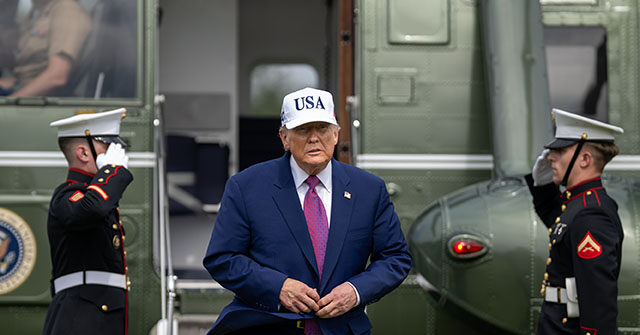
President Donald Trump announced Tuesday that the United States is carrying out “large and powerful” strikes against Iranian targets near the Strait of Hormuz, warning Tehran that any retaliation would trigger a far heavier response while revealing an even larger attack is “waiting in the wings” that would leave “very little” of the Islamic Republic.
“The United States is, as we speak, striking Iranian Targets near the Strait of Hormuz,” Trump wrote on Truth Social. “The strikes are large and powerful, and in retaliation for the Iranians’ failed attempt at adding sea mines to the Strait, which currently has no mines (They have been completely removed or detonated!), and the Iranians shooting eight missiles, all successfully knocked down, at our Military Base in Jordan.”
Trump then issued an extraordinary warning against any Iranian response to the ongoing operation.
“If the failed Nation of Iran retaliates for this very justified attack, they will be hit again at a much harder and higher level, but it will not be the biggest attack of them all, that is waiting in the wings and, when it is over, there will be very little left of the Islamic Republic of Iran!” he wrote.
U.S. Central Command confirmed shortly before Trump’s announcement that American forces began striking Islamic Revolutionary Guard Corps (IRGC) targets inside Iran at noon ET Tuesday.
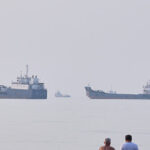
“The strikes follow recent attempted attacks by the IRGC against commercial shipping in the Strait of Hormuz and against American service members deployed to the region,” CENTCOM said.
The operation remained underway Tuesday afternoon, a U.S. official told Al Jazeera.
A senior U.S. official said American forces struck sites in the Bandar Abbas area, while Iranian media reported explosions in Bandar Abbas, Sirik and on Qeshm Island. An Iranian provincial security official also confirmed attacks on Chabahar and Konarak, saying four projectiles struck the two counties as authorities assessed potential damage.
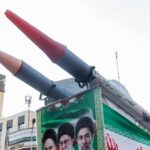
The renewed strikes follow a rapid escalation that began Sunday, when U.S. forces struck two IRGC rocket launchers on Larak Island after CENTCOM said Iranian forces were preparing them to fire rockets carrying sea mines into the Strait of Hormuz.
CENTCOM described that operation as “limited, precise action” against an imminent threat to commercial shipping.
Iran responded by firing eight missiles toward U.S. forces in Jordan. Trump said Monday that the missiles were intercepted and vowed there would be an American response.
“We’re going to hit them hard,” Trump said.
Hours later, Trump described any renewed U.S. military action as likely to remain “very limited,” while warning that Iran’s battered military condition did not preclude additional attacks.
“That doesn’t mean we won’t smack them,” he told reporters. “We’ll see what happens.”
The strikes also appear to put into action a military plan under consideration by Trump and senior administration officials in recent days.
Axios reported Monday that CENTCOM had developed a plan for limited strikes around the Strait of Hormuz aimed at preventing Iran from rebuilding radar, air-defense and anti-ship missile capabilities that could threaten commercial tankers, U.S. Navy vessels and American aircraft. One U.S. official described the objective as periodically having to “mow the lawn” to reduce the threat.
The outlet reported Tuesday that Trump ordered the new strikes and that the attacks are part of that plan.
The latest confrontation comes after U.S. forces cleared Iranian sea mines from internationally recognized shipping lanes through Hormuz, an operation CENTCOM called a “major milestone.” Trump emphasized Tuesday that the strait currently has “no mines,” saying they had been “completely removed or detonated.”
CENTCOM separately said Tuesday that U.S. forces enforcing the naval blockade against Iran have redirected 84 commercial vessels, disabled three and boarded two to ensure compliance.
Iranian lawmaker Ebrahim Azizi, meanwhile, warned Tuesday that Iran’s “doctrine of deterrence has evolved,” declaring that the strength of the country’s armed forces would ensure its enemies “regret” their actions.
“Iran’s latest response was more than a warning. It was a formal declaration: Iran’s doctrine of deterrence has evolved,” Azizi wrote on X. “The message is clear: the might of its armed forces will ensure enemy regret.”
As the American strikes continued Tuesday, the State Department urged U.S. citizens across the Middle East to “exercise heightened vigilance,” warning that the security environment carried the potential for “unforeseen escalation.”
“Iran and groups supportive of Iran may target U.S. interests overseas or at locations associated with the United States and Americans throughout the world, including U.S. businesses and other institutions,” the alert said.
Joshua Klein is a reporter for Breitbart News. Email him at jklein@breitbart.com. Follow him on Twitter @JoshuaKlein.